
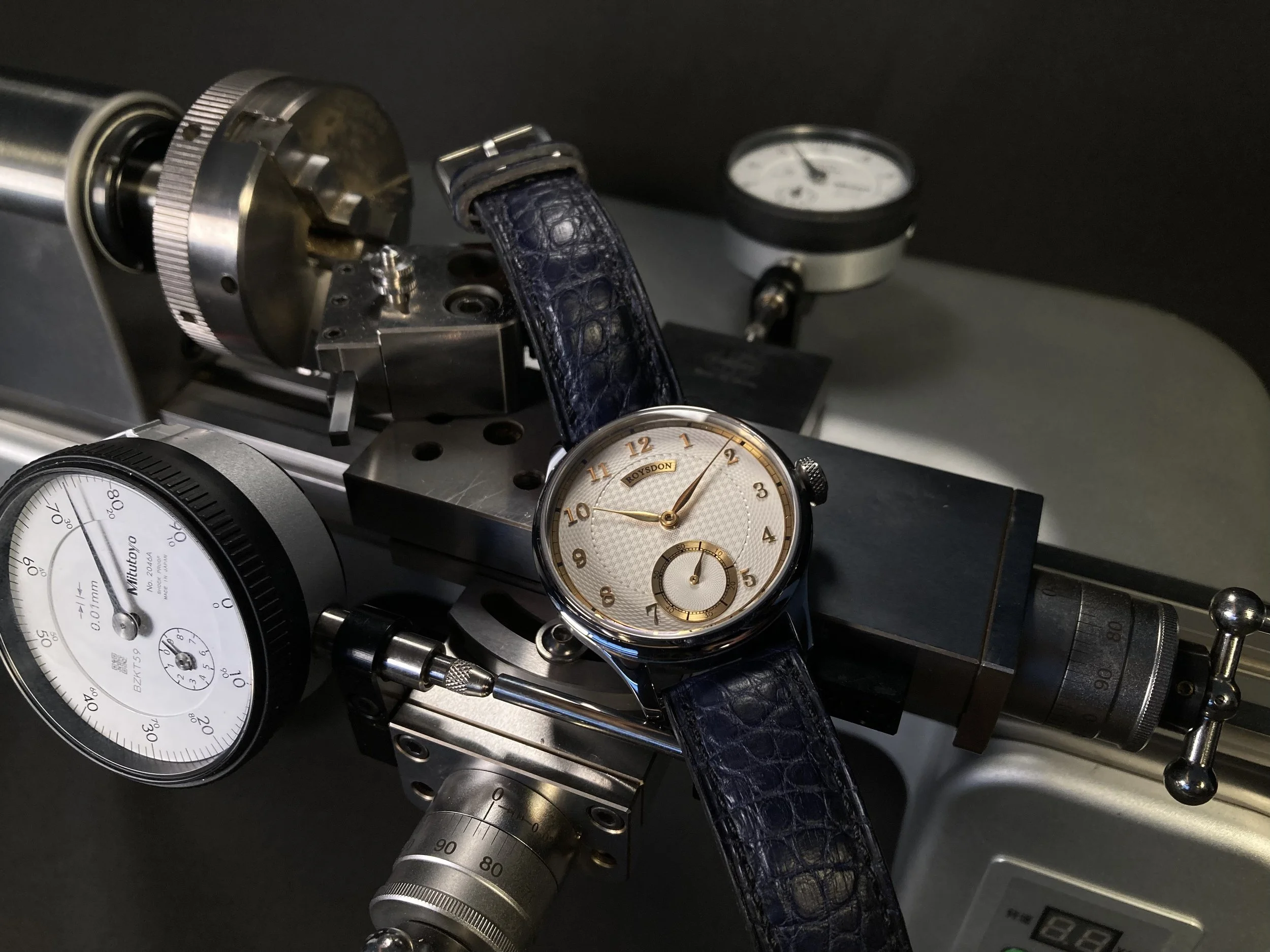
THE PROCESS
FROM RAW MATERIAL TO TIME.
“Vertical integration” is an industry expression. At Roysdon Watch Co., it has a simpler meaning: The person who imagined the watch is the person who has to make it. From the first calculation to the final regulation, every Roysdon Watch passes through the same workshop and the same hands.
DESIGN
BEFORE METAL, MATHEMATICS.
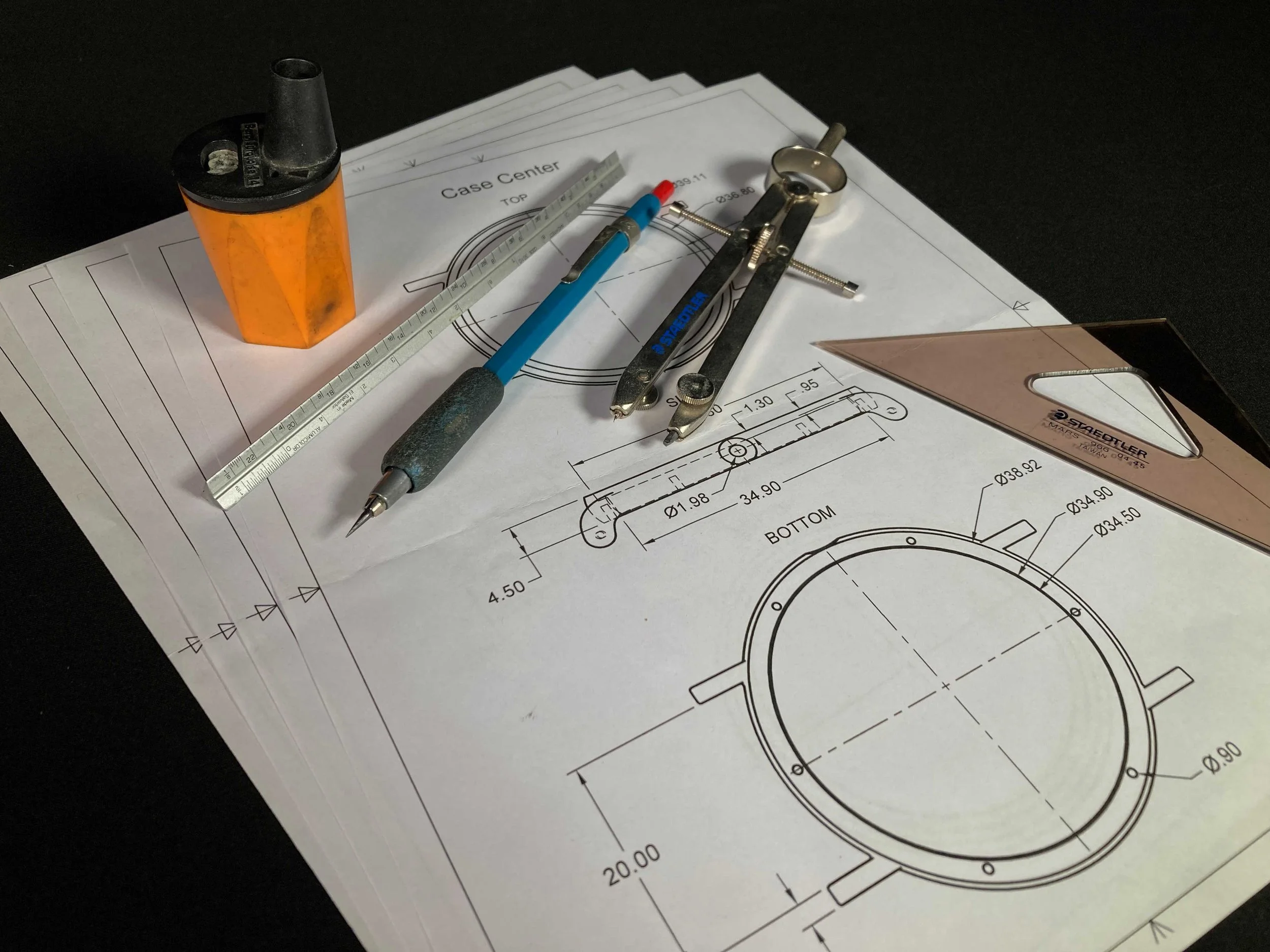
Every Roysdon Watch begins long before the first piece of metal is cut. Gear calculations, movement architecture, tolerances and dimensions are worked out first, then developed into detailed 3D CAD models and manufacturing drawings. The first hours leave no physical trace. They exist only as calculations, drawings and decisions.
Before a watch can be made, it must first be understood.
MOVEMENT MAKING
REMOVE EVERYTHING THAT IS NOT THE PART.
A movement begins as raw material that does not yet know what it will become.
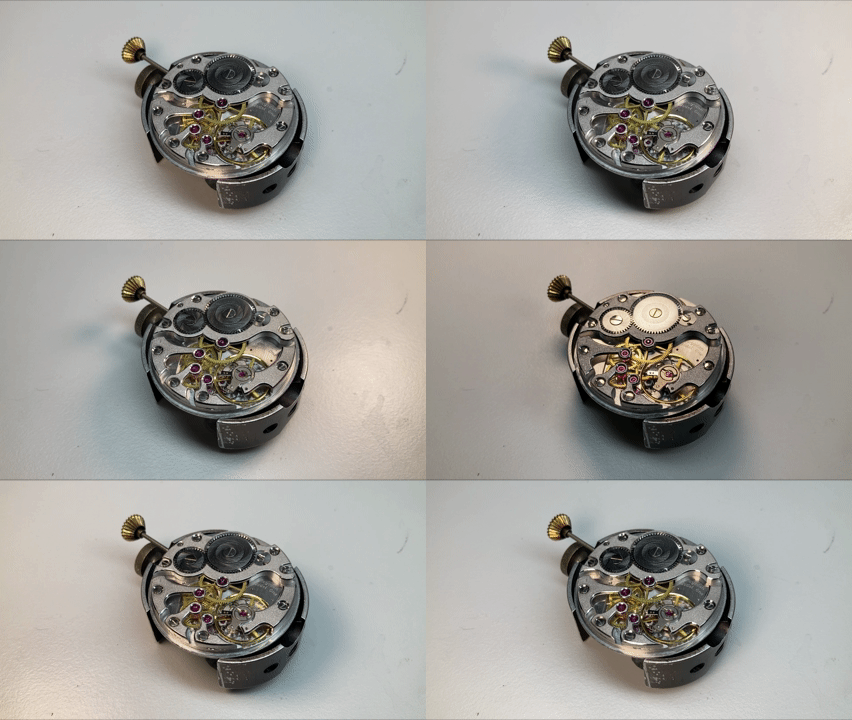
Using the CNC mill, watchmaker's lathe and traditional hand tools, material is progressively milled, turned, drilled and cut away to create mainplates, bridges, wheels, pinions and screws.
Each component may measure only millimeters, but together they must function as one machine.
Hundreds of individual parts. One mechanical purpose: keeping time.
CNC MACHINING
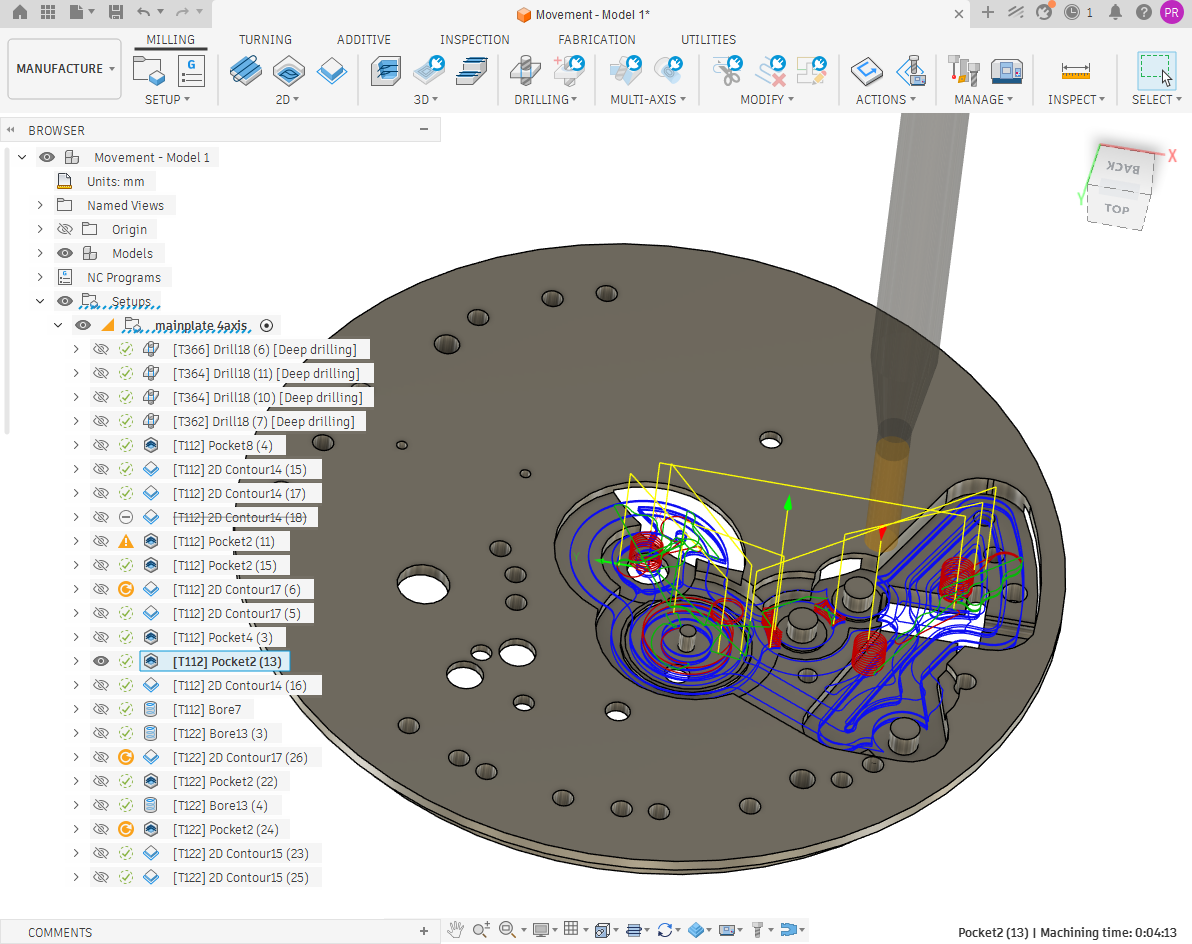
The process to design a complete watch in CAD can take many months. After which several more months are spent determining the right materials to use, selecting the right endmills to cut the materials, determining the speeds and feeds for the CAM tool paths, and programming the tool paths for each stage, e.g., a single part like the mainplate requires 50 operations and 22 different tools. Then the CNC machining begins and prototypes are made. At this stage, most parts are scraps until the right combination of endmills, paths, etc., are determined, and only then is the final part made. This process is repeated for each and every part, e.g., case, dial, hands, movement mainplate and bridges. While modern tools and methods are employed, it is definitely not an automated process just because a CNC is used.
HAND MACHINING
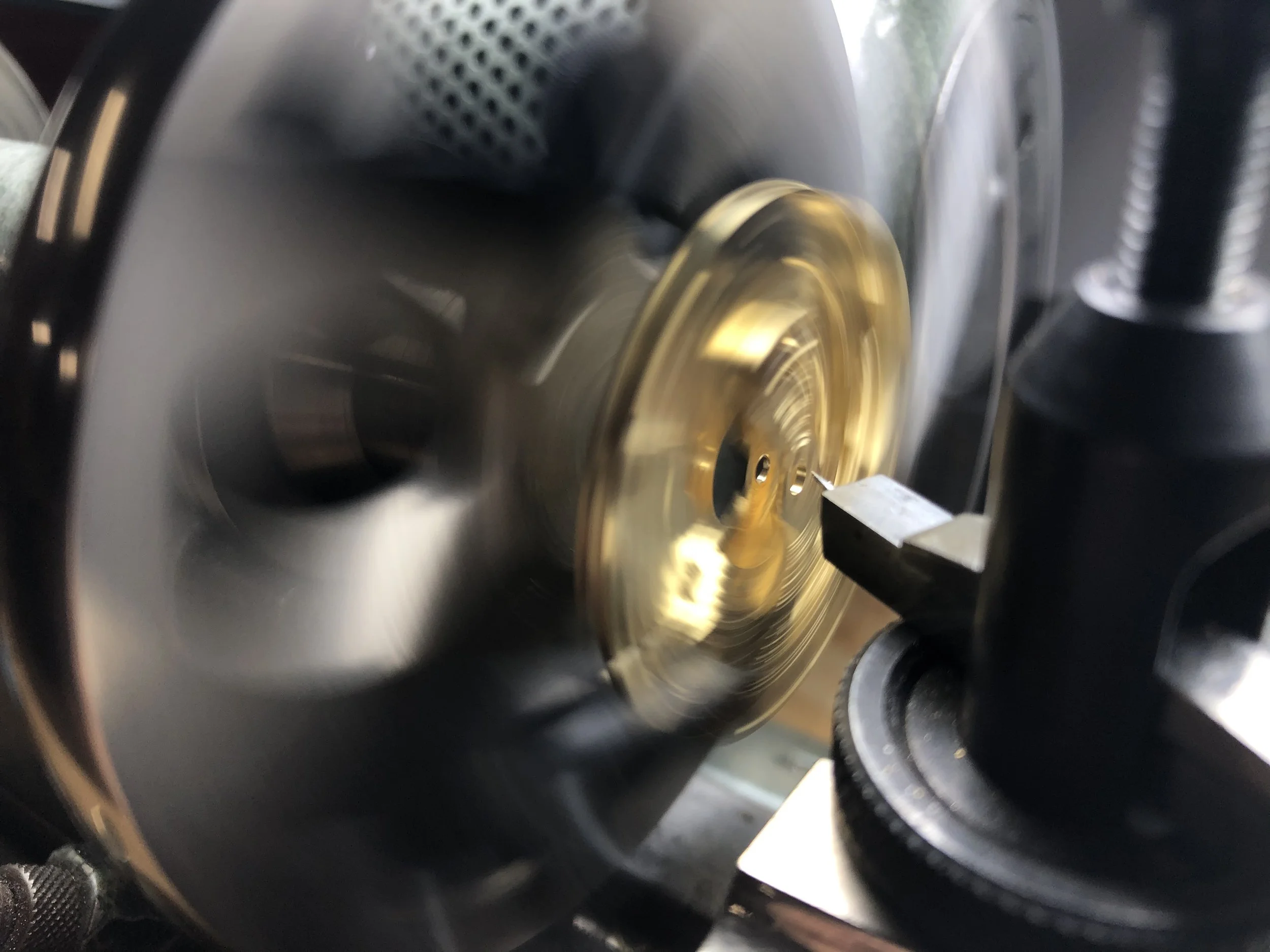
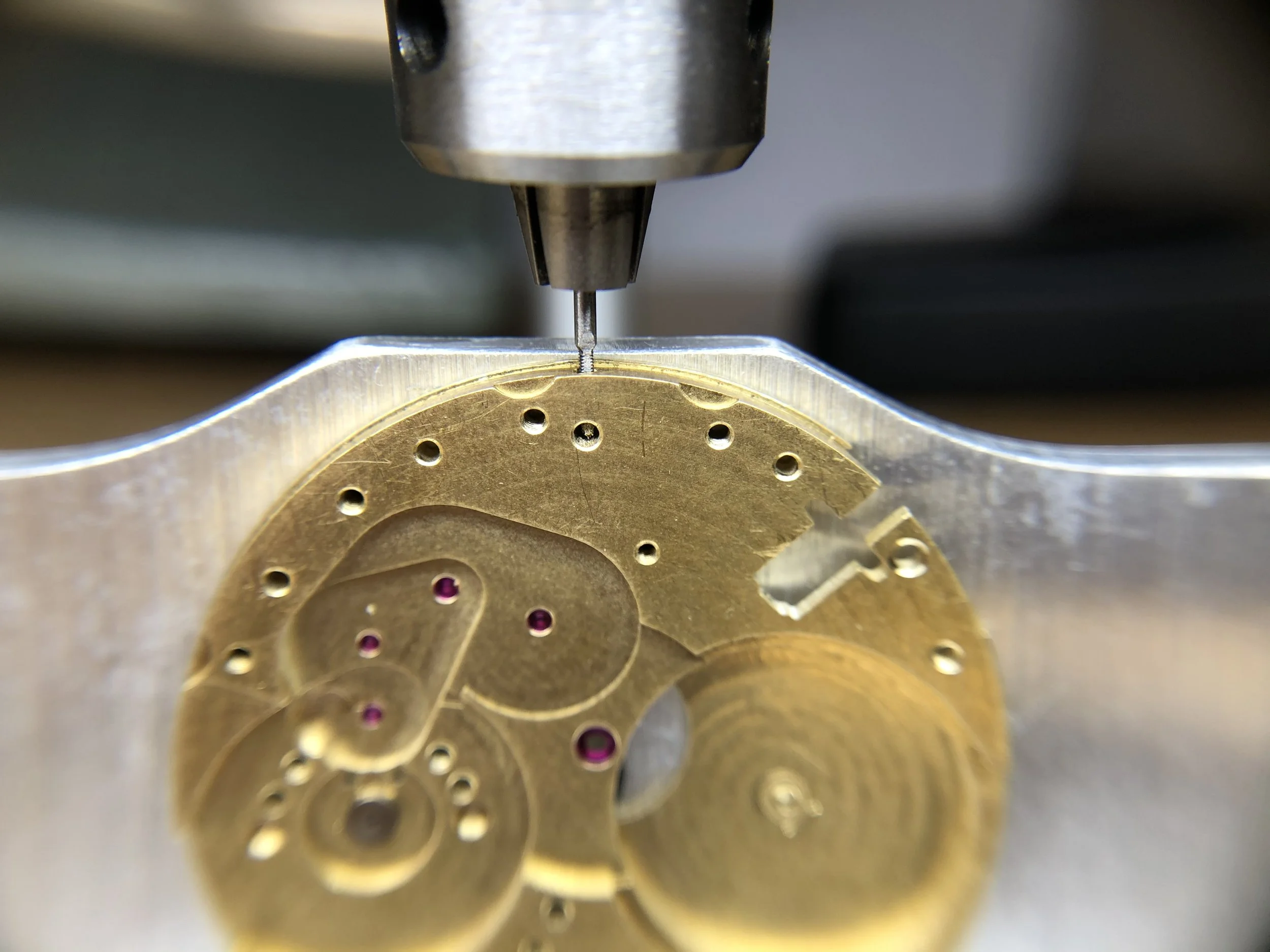
Several parts must be machined or completed by hand, e.g., jewel holes on the mainplate and bridges (top), drilling the spring-pin holes in the case, or tapping the 22 holes in the mainplate (bottom). This process is performed primarily on a watchmaker lathe and requires many weeks of work.
MAKING SCREWS
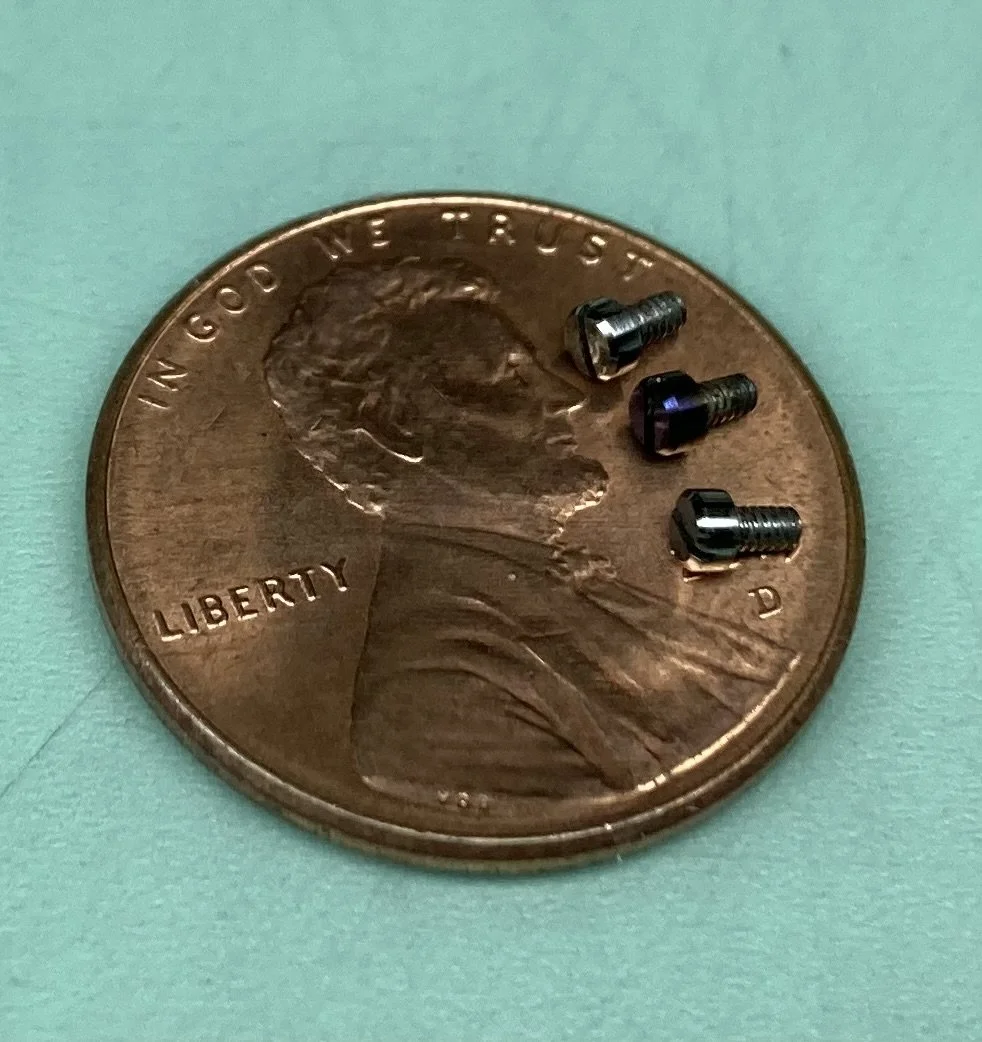
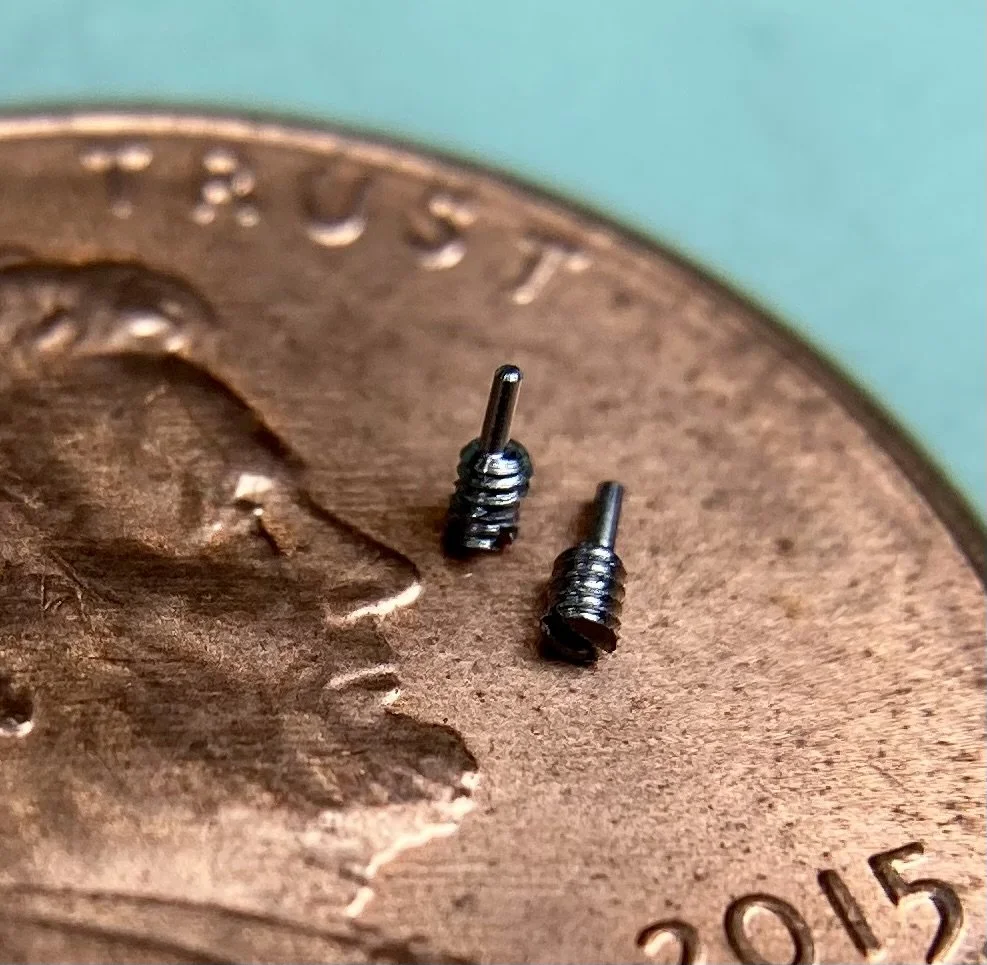
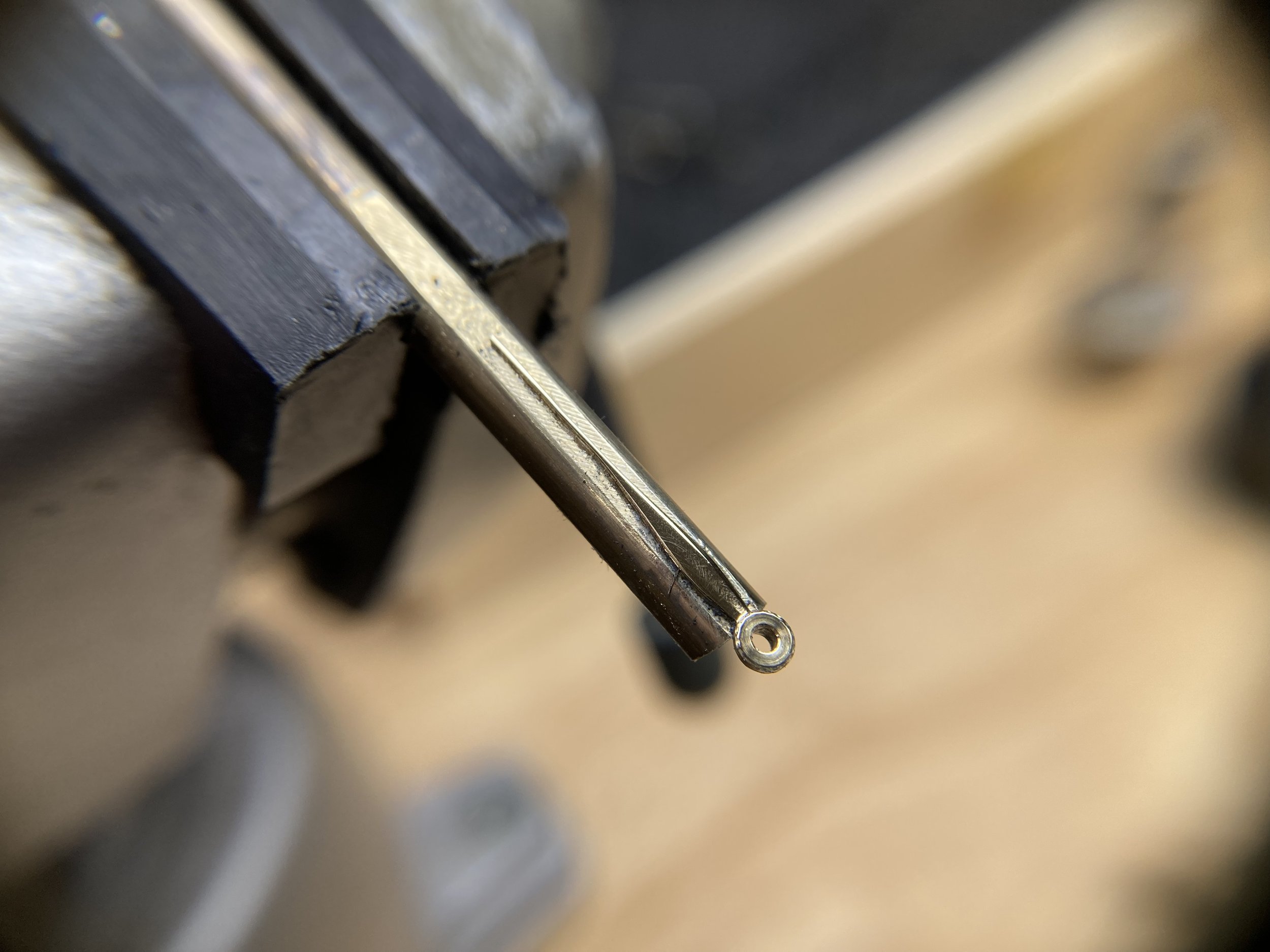
Nearly everything on our movements is made from scratch, including 14 screws. These tiny screws with a 0.3 mm to 1.2 mm thread diameter are made of steel on a watchmaker lathe, by hand, then hardened, tempered and black (mirror) polished. Unlike mass manufactured screws, both the head and the end of the screw are mirror polished, the slot must be media blasted to a satin finish, even the edges of the slot and perimeter of the screw head are chamfered with a straight-grain finish. Even small eccentric (off-center) banking pins must be made, wherein the 0.3 mm pin is off center by 0.15 mm and the thread is 0.5 mm (bottom). Making a single screw takes 1-2 hours.
MAKING WHEELS & PINIONS
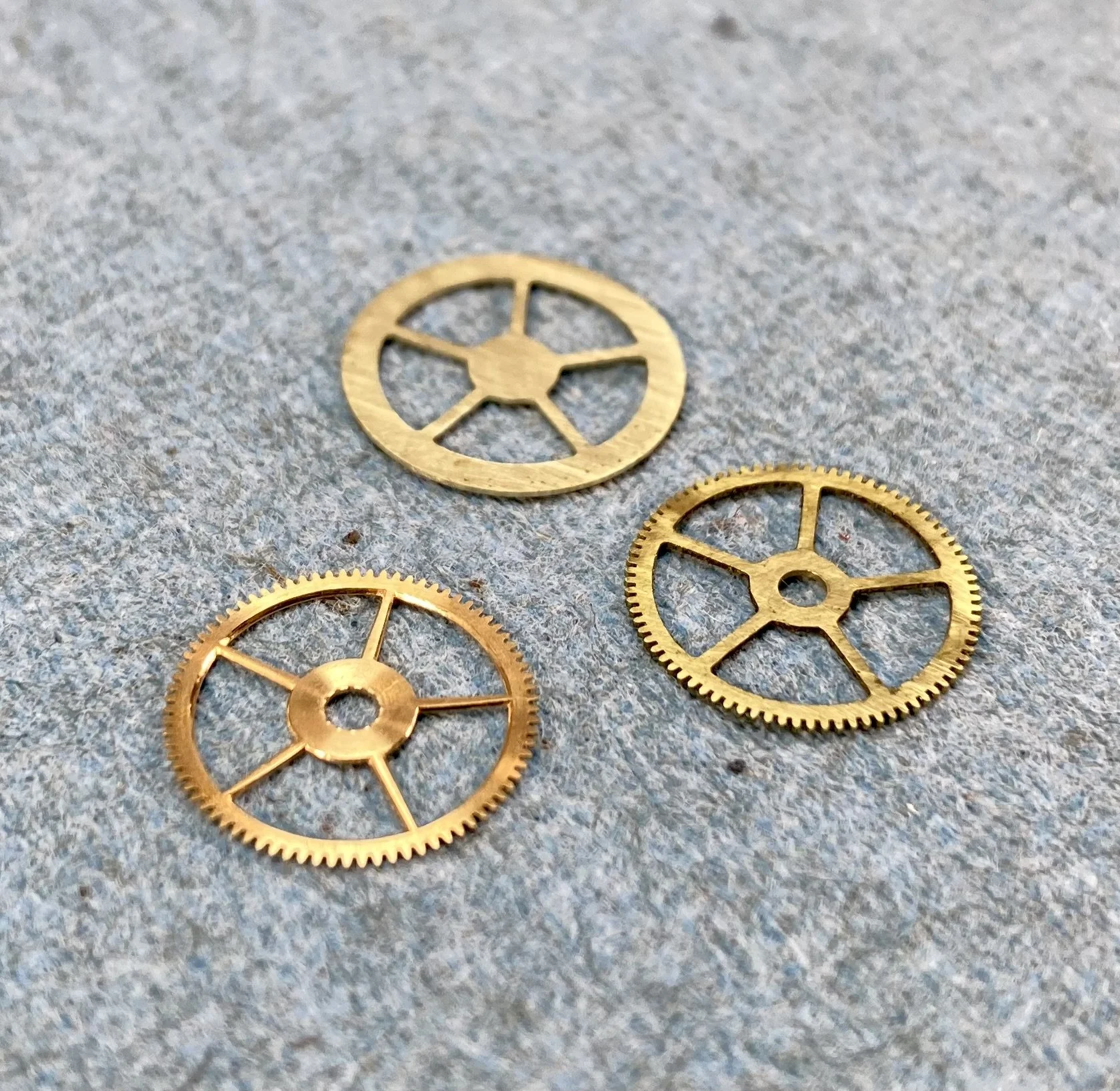
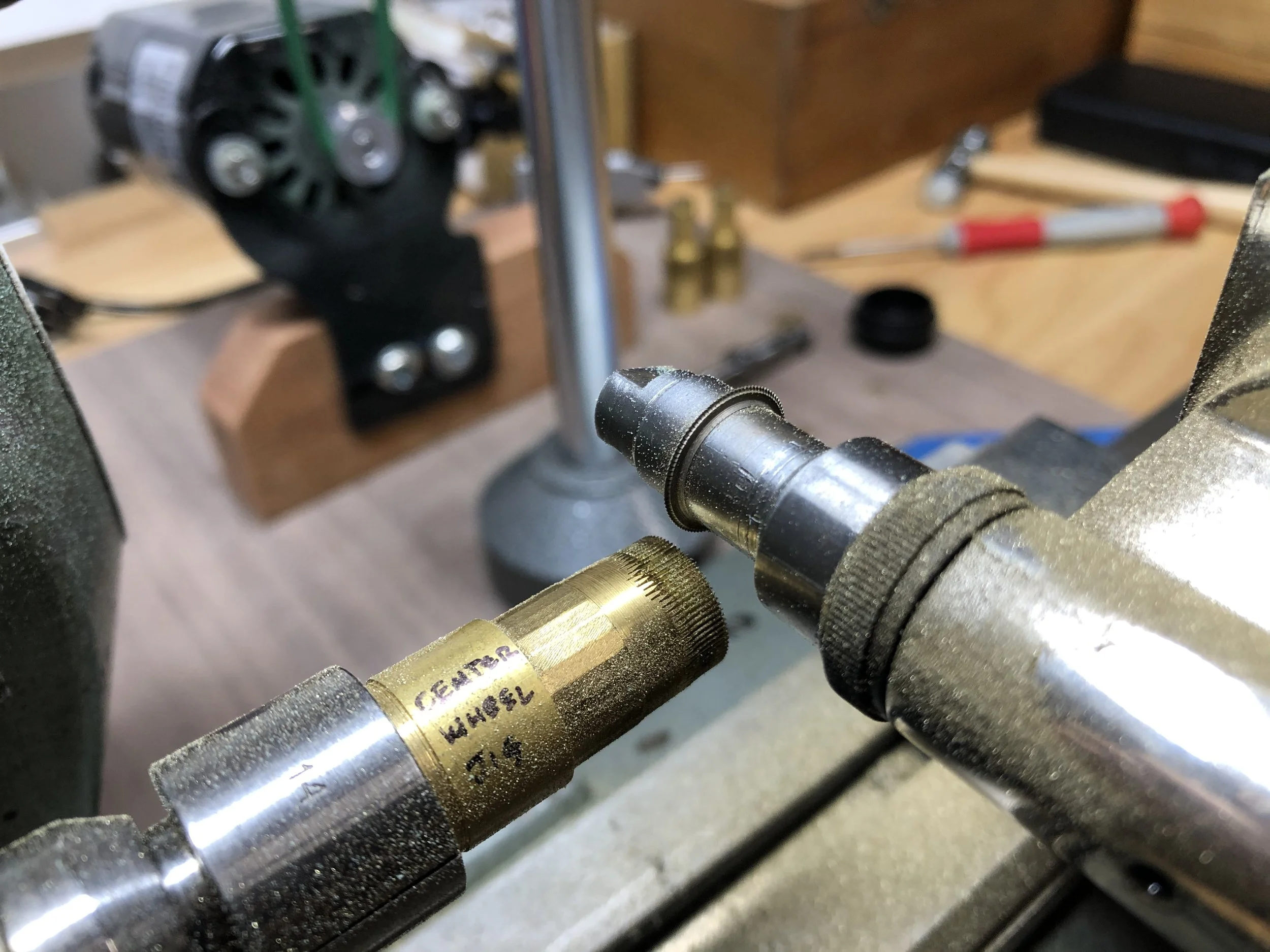
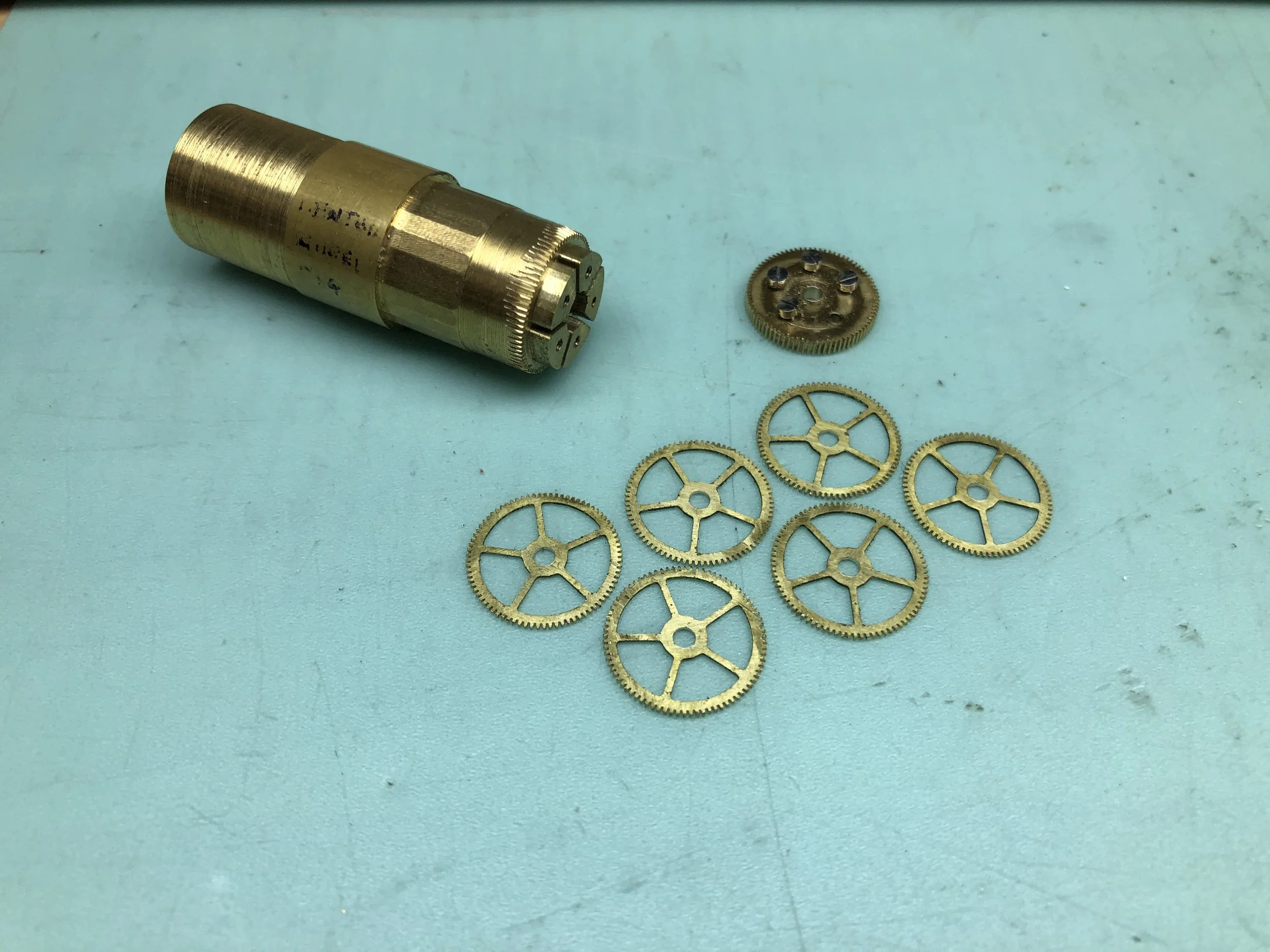
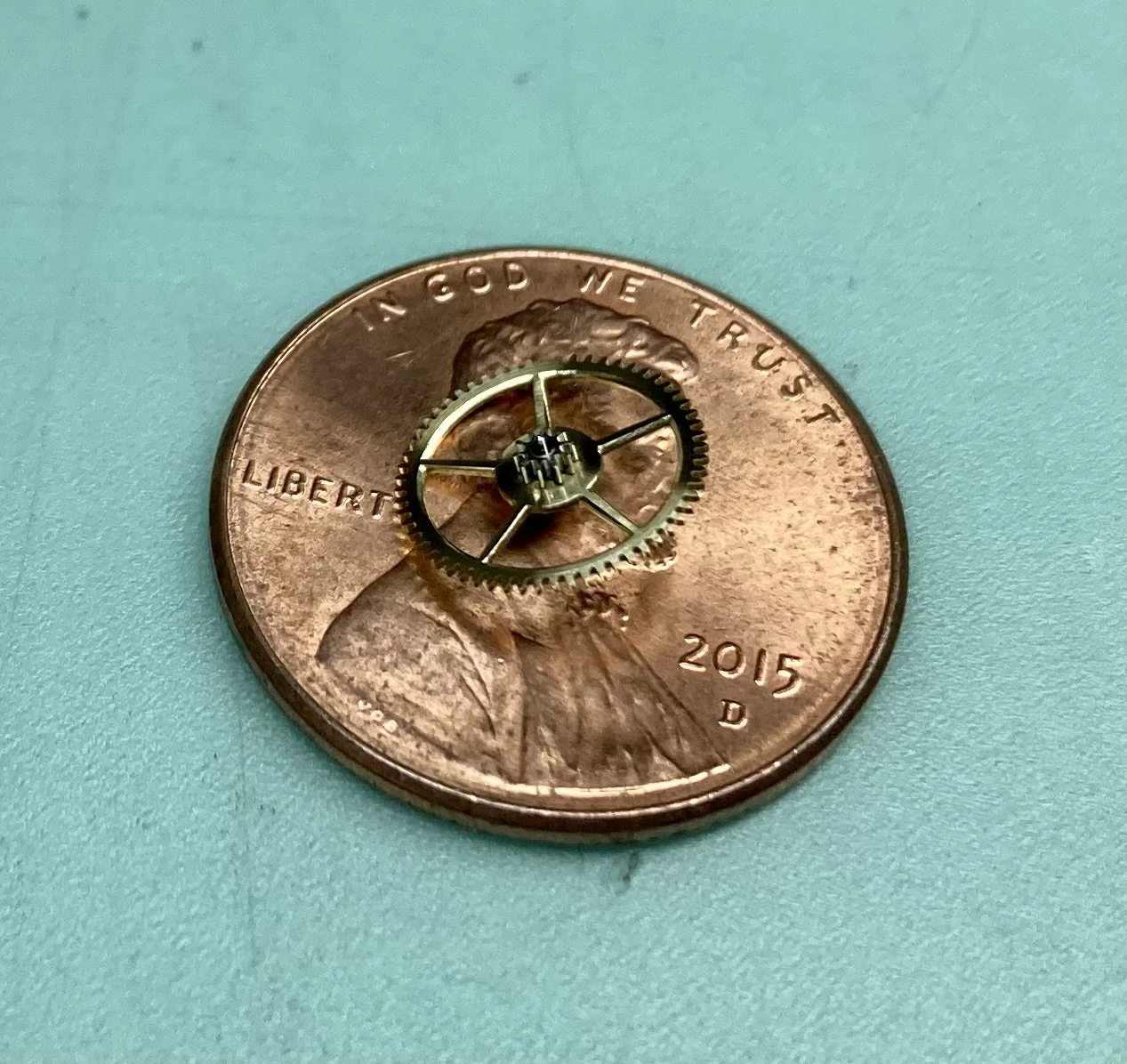
The most difficult step in watchmaking is making wheels and pinions. Great skill and attention to detail is necessary to ensure that the diameter is correct and the teeth are well formed and polished (to minimize friction). Wheels are milled on the lathe using a mandrel, 6 wheels at a time. Each wheel starts as a blank machined on the CNC mill (top), then the teeth are cut on a lathe (middle), then the spokes and rim are chamfered, mirror polished and the top surface is straight-grained, finally the pinion is “staked” to the wheel, and the teeth are polished (right). Each wheel and pinion can take several days to make.
JEWLING
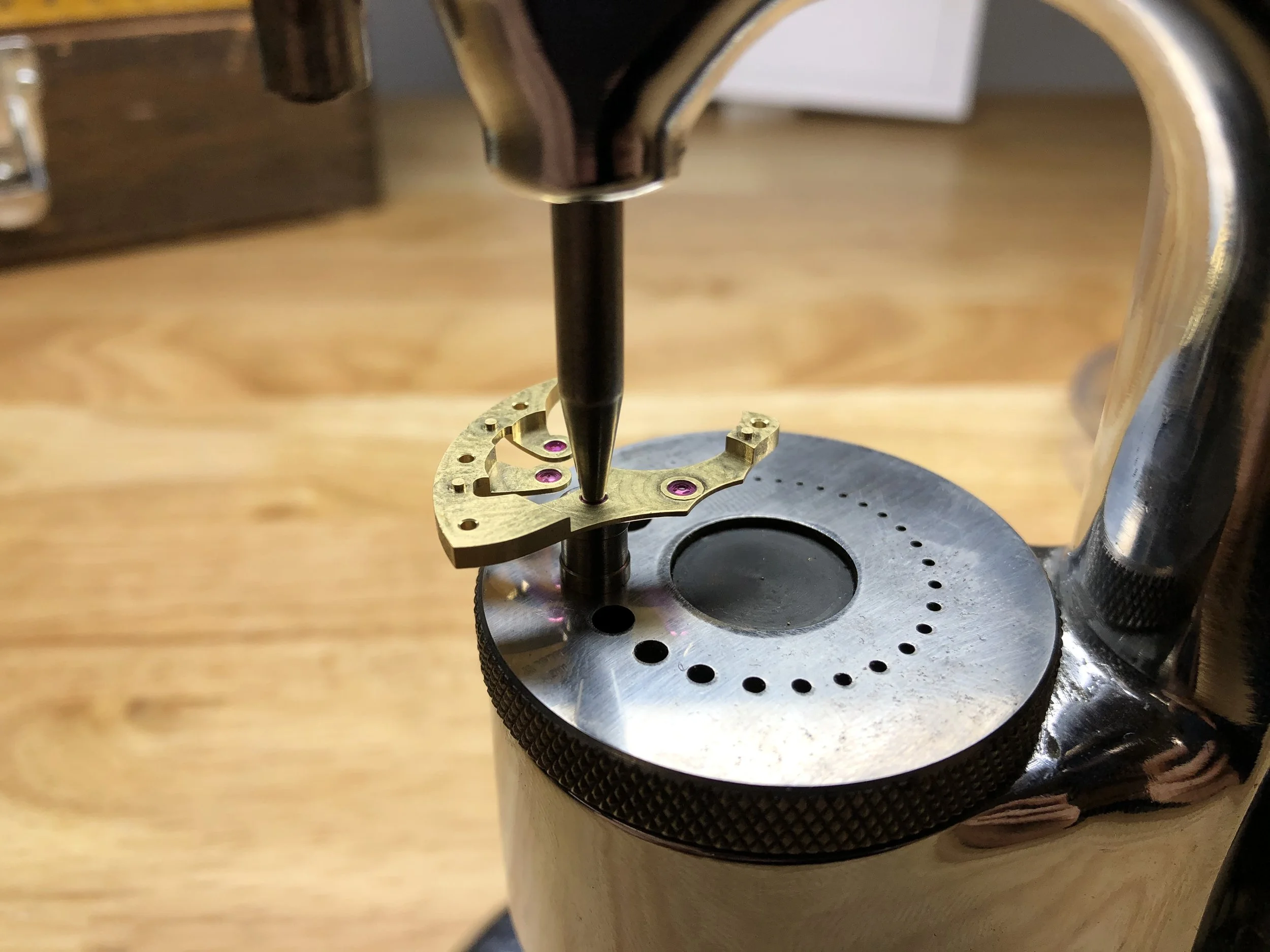
Each ruby jewel is press-fit using very precise tools and tolerances, such that the gap between the jewel and the pinion results in 0.05 mm of “end shake” or up/down movement of the wheel and pinion. During the boring operation described above, the hole is bored 0.01 mm smaller in diameter to ensure a snug press-fit of the jewel. This step takes many hours for each bridge and the mainplate.
CASE MAKING
METAL BECOMES ARCHITECTURE.
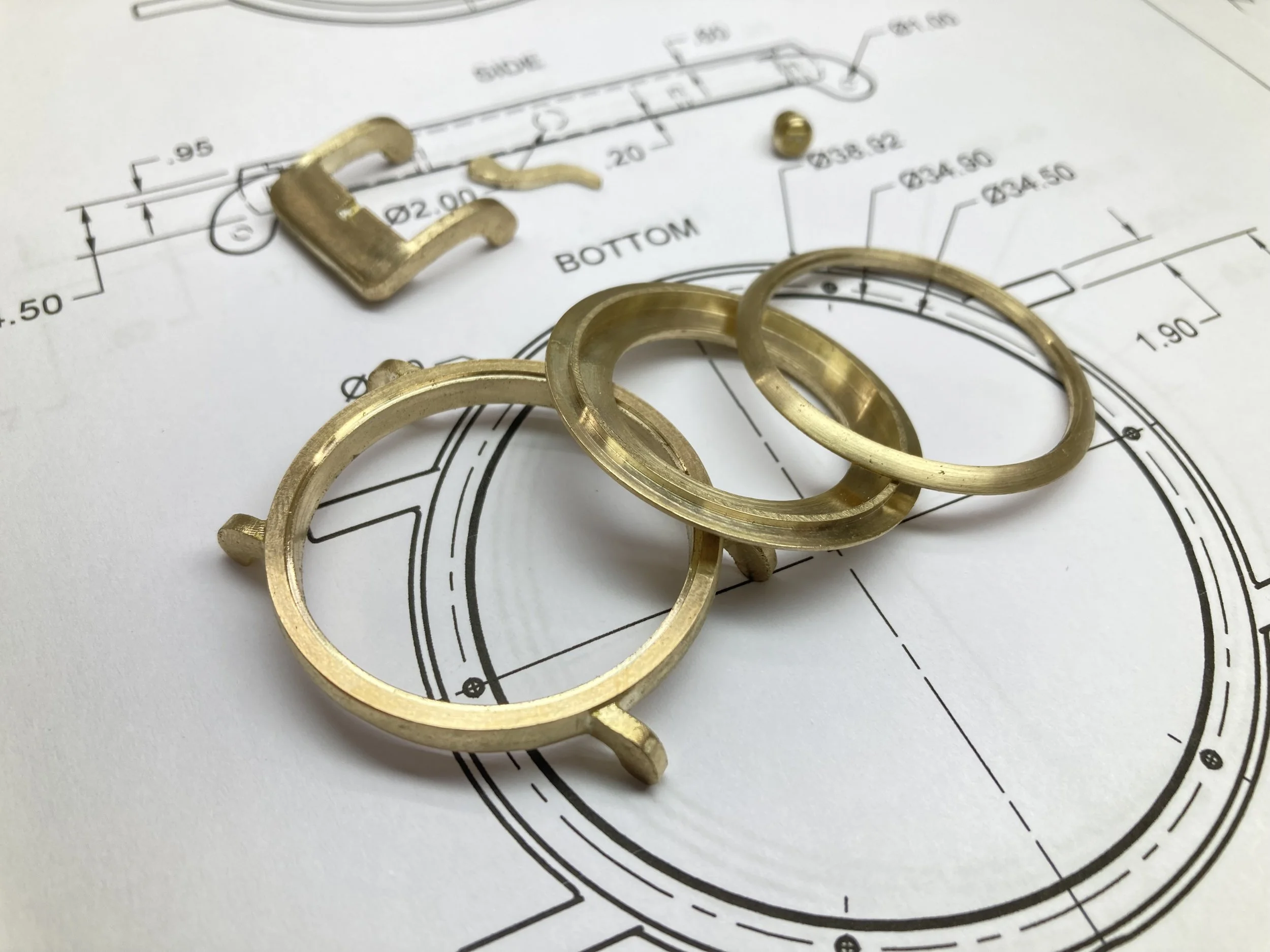
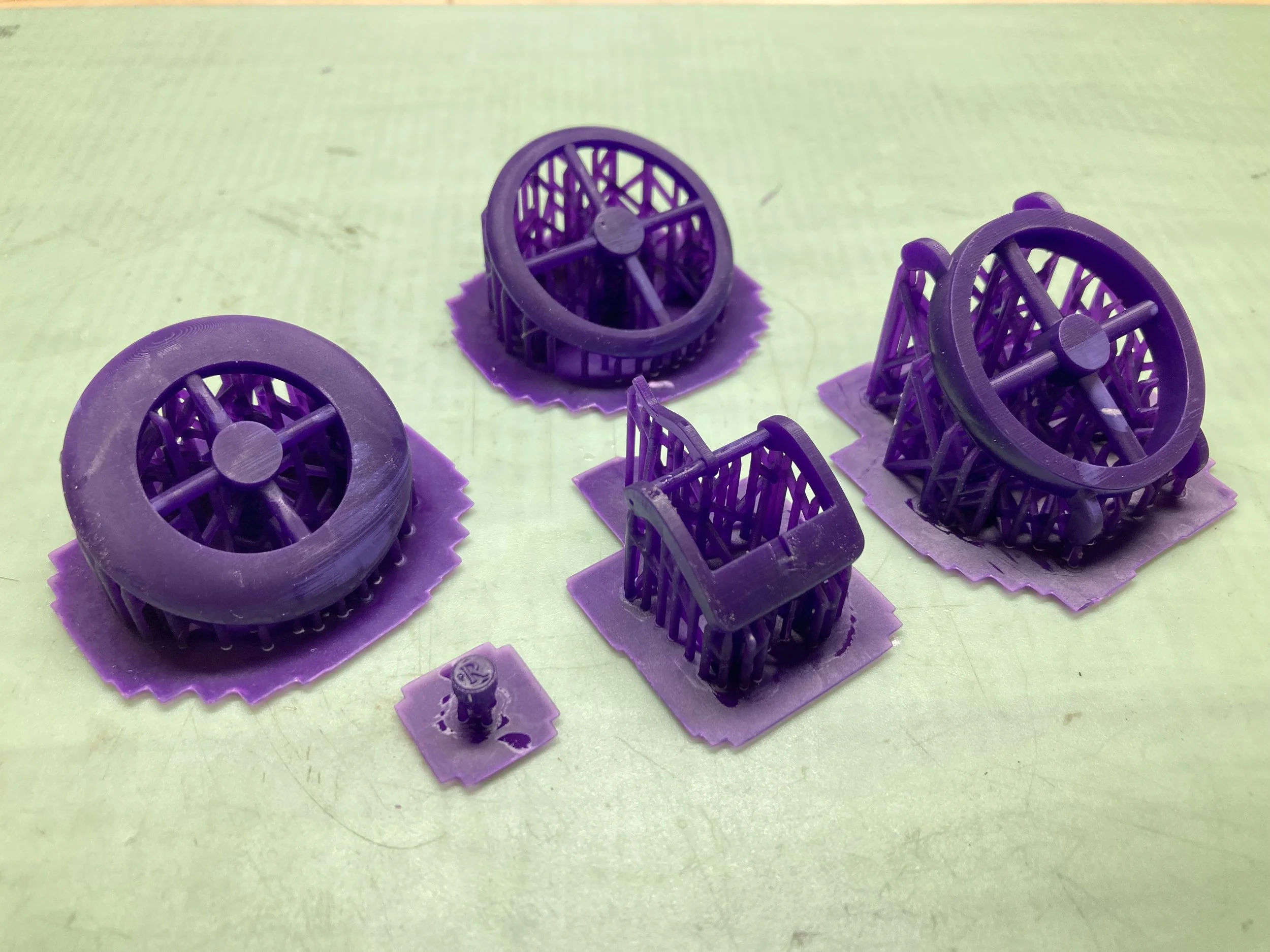
Every Roysdon case, crown and buckle begins as a 3D CAD model, engineered to precise dimensions before anything physical exists. From that digital design, we create castable masters on a high-resolution resin 3D printer, clean them by hand, and assemble them onto a casting sprue.
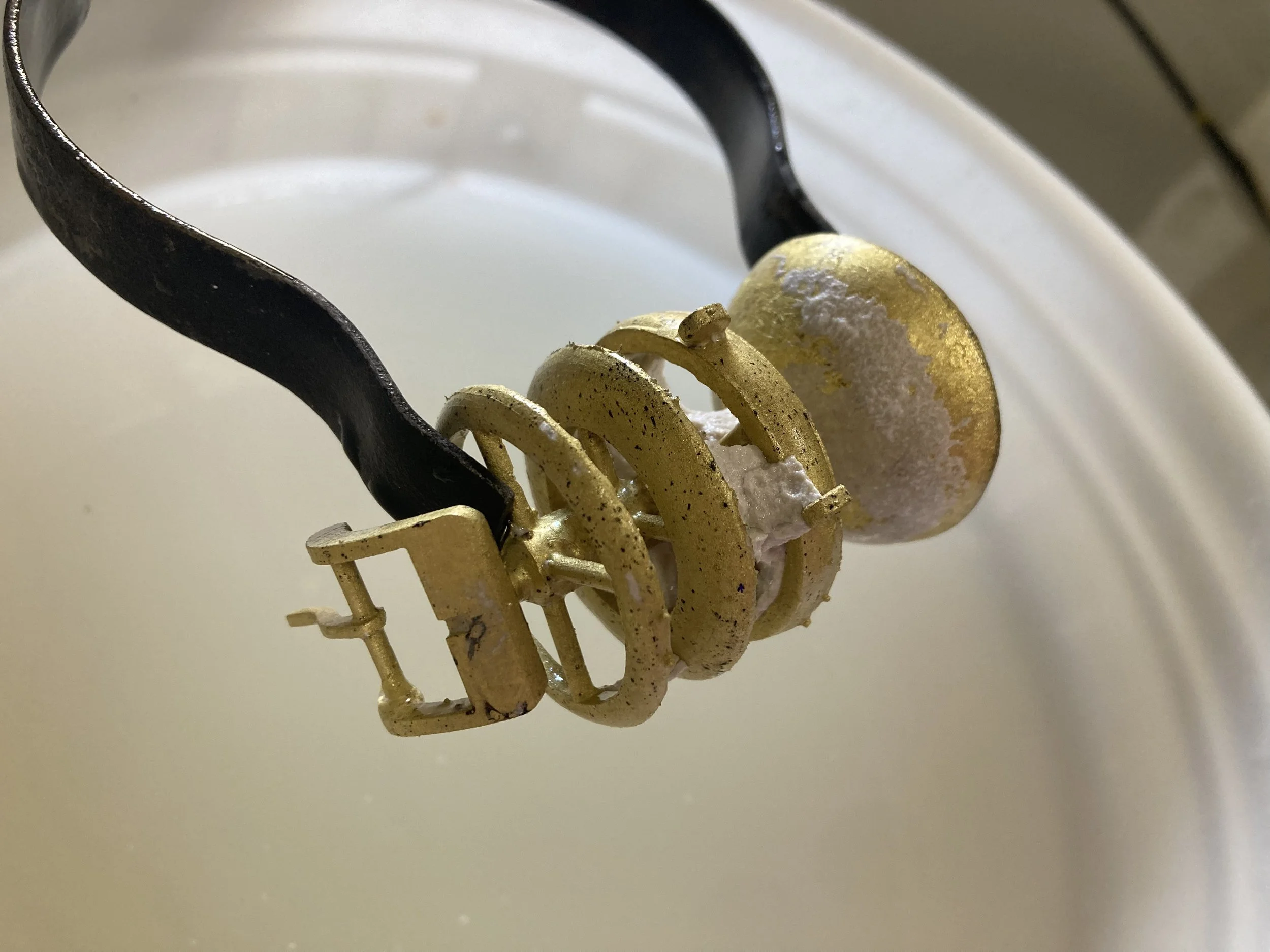
From there, modern technology gives way to a 6,500-year-old process: lost-wax investment casting. The printed masters are encased in investment plaster and fired in a kiln, burning away the resin and leaving an exact cavity behind.
Our proprietary 18k Texas Gold alloy is then heated to approximately 1,150°C (2,100°F) and vacuum-cast into the mold, transforming molten gold into the rough form of the watch.
Casting creates the shape. Machining creates the precision.
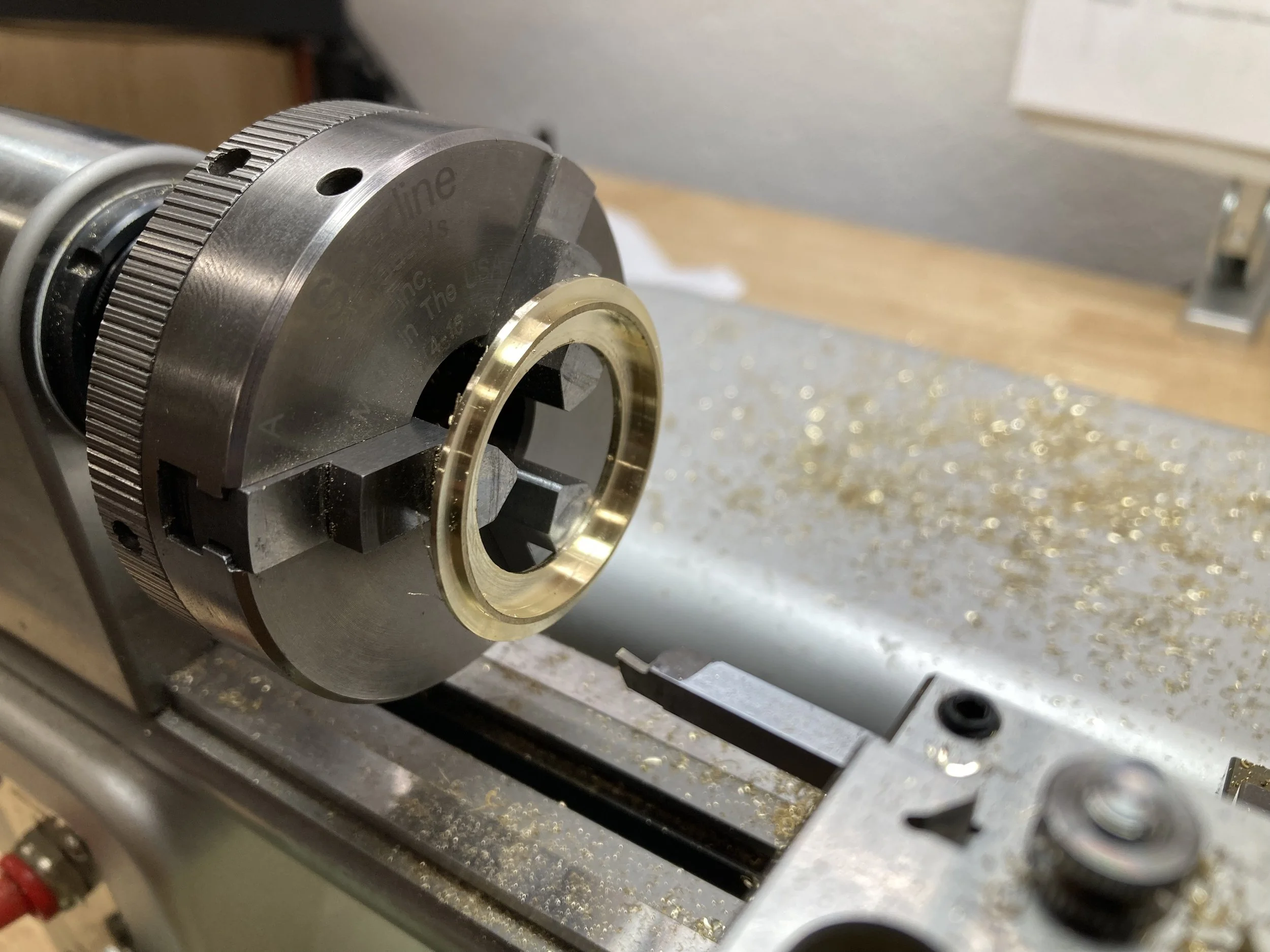
Each part is returned to the bench, where the sprues and excess material are removed and the case, crown and buckle are individually machined on the lathe and CNC mill to their final dimensions, then sanded and polished by hand.
From CAD, to resin, to fire, to molten Texas Gold, to the finished watch, every step happens in our workshop.
THE DIAL
GEOMETRY BECOMES LIGHT.
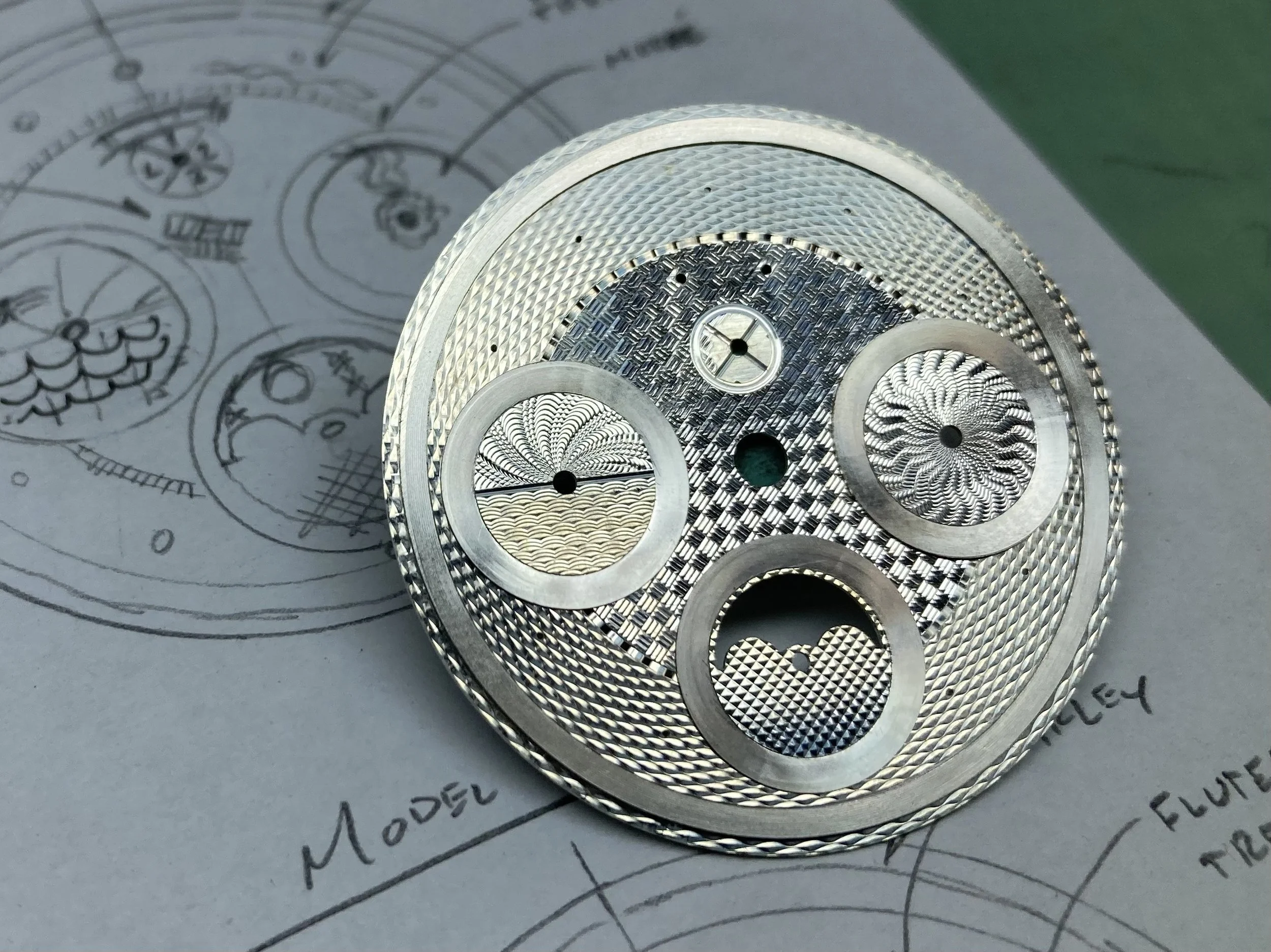
A true guilloché pattern is not printed onto the dial. It is cut into it, one controlled line after another.
Using traditional rose and straight-line engines, intricate geometric patterns are cut into silver and gold surfaces, creating textures that change as light moves across the dial.
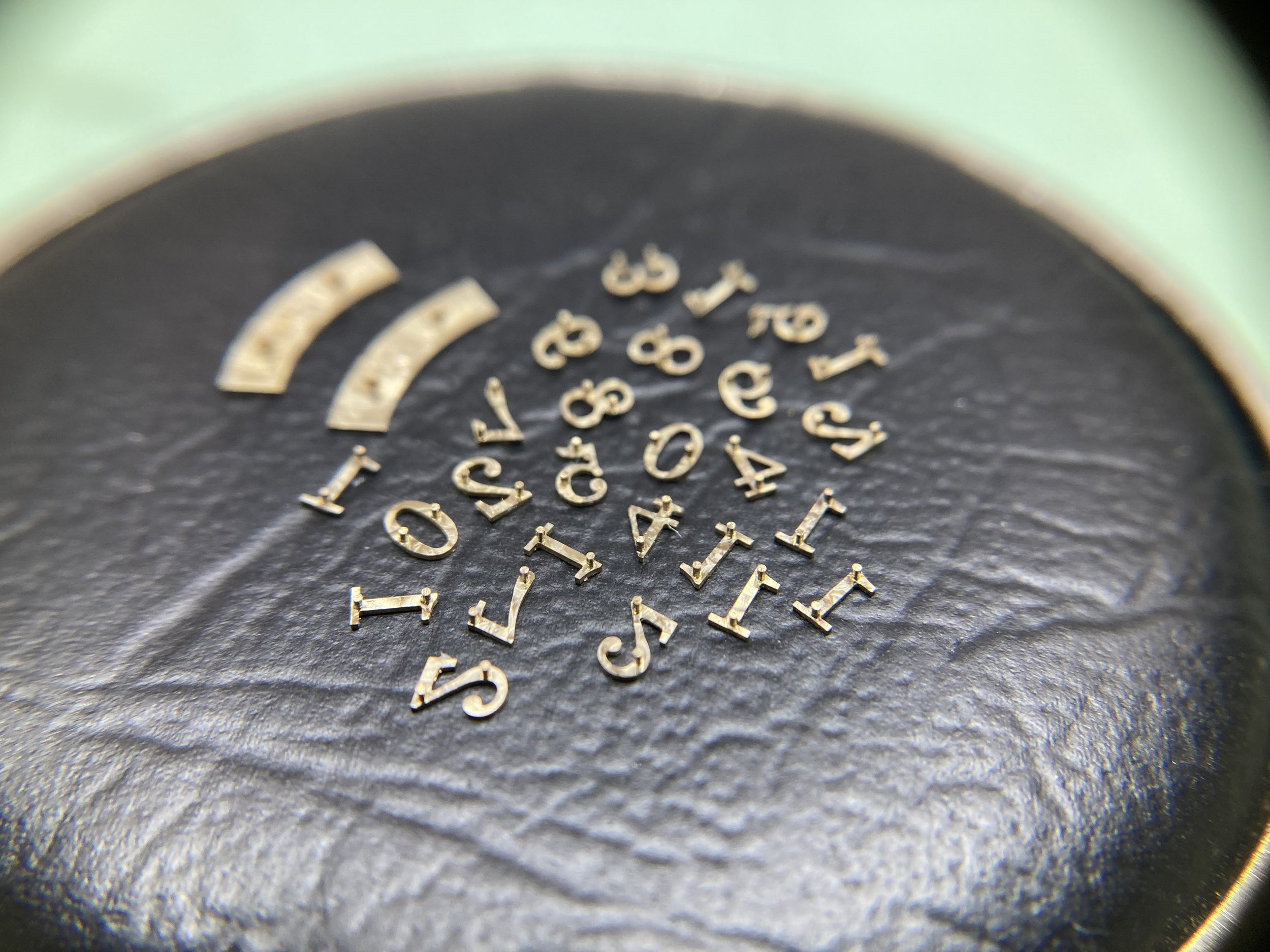
Depending on the watch, the dial may then incorporate enamel, pad-printed lettering, and individually made 18k gold indices and chapter rings.
The geometry is cut by the watchmaker. Light does the rest.
HANDS
WHERE THE MACHINE BECOMES VISIBLE.
Deep inside the watch, hundreds of components work together to measure time.
The hands are where that work finally becomes visible.
Roysdon Watch hands are individually shaped, sculpted and finished by hand, from 18k gold.
Tiny in scale but visually essential, each must be precisely proportioned to the dial it was designed to inhabit.
The movement measures time. The hands reveal it.
METROLOGY
MEASURE. VERIFY. BEGIN AGAIN.
Machining a precision part is only half the job. The other half is proving that what was made matches what was designed.
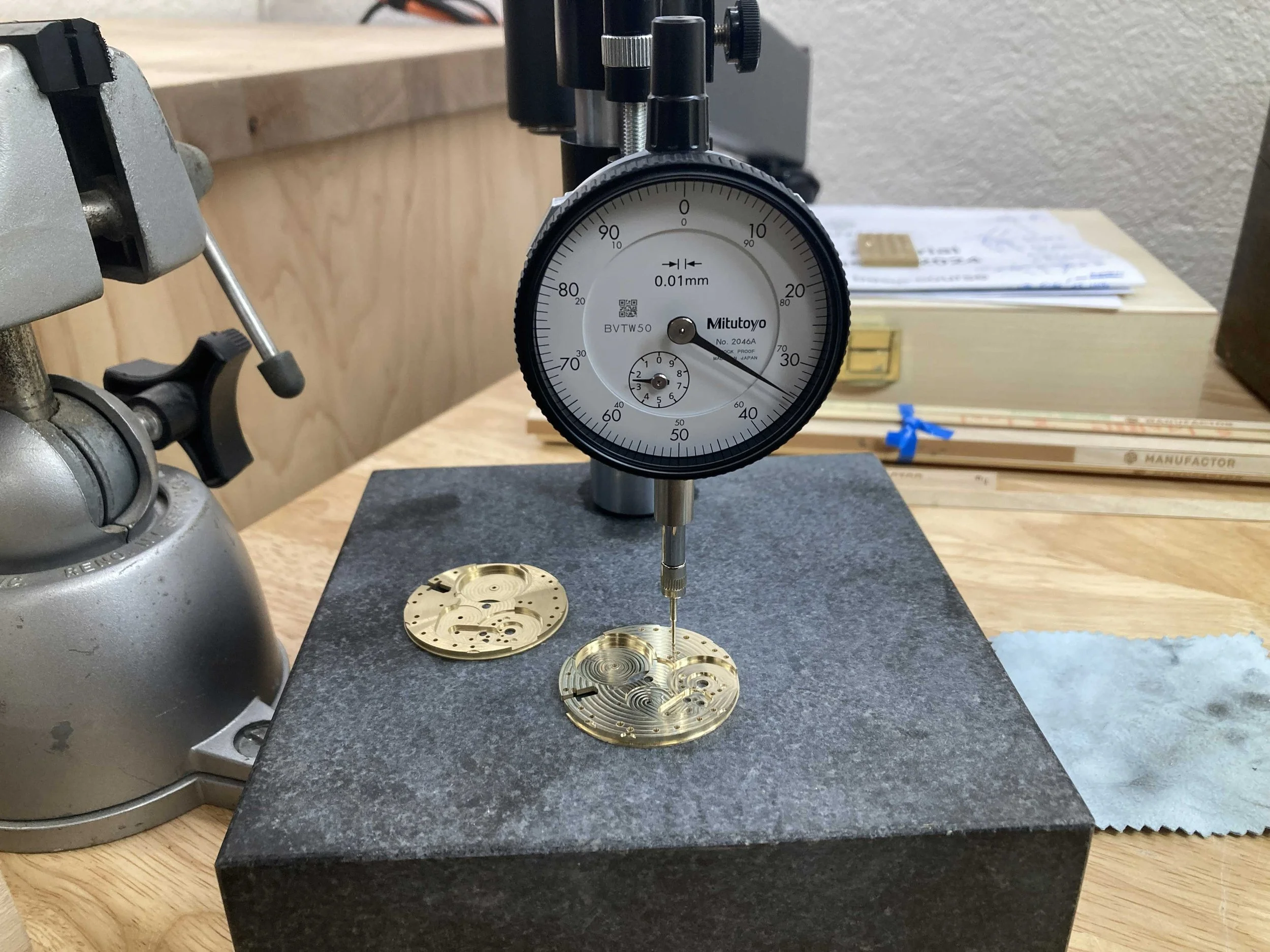
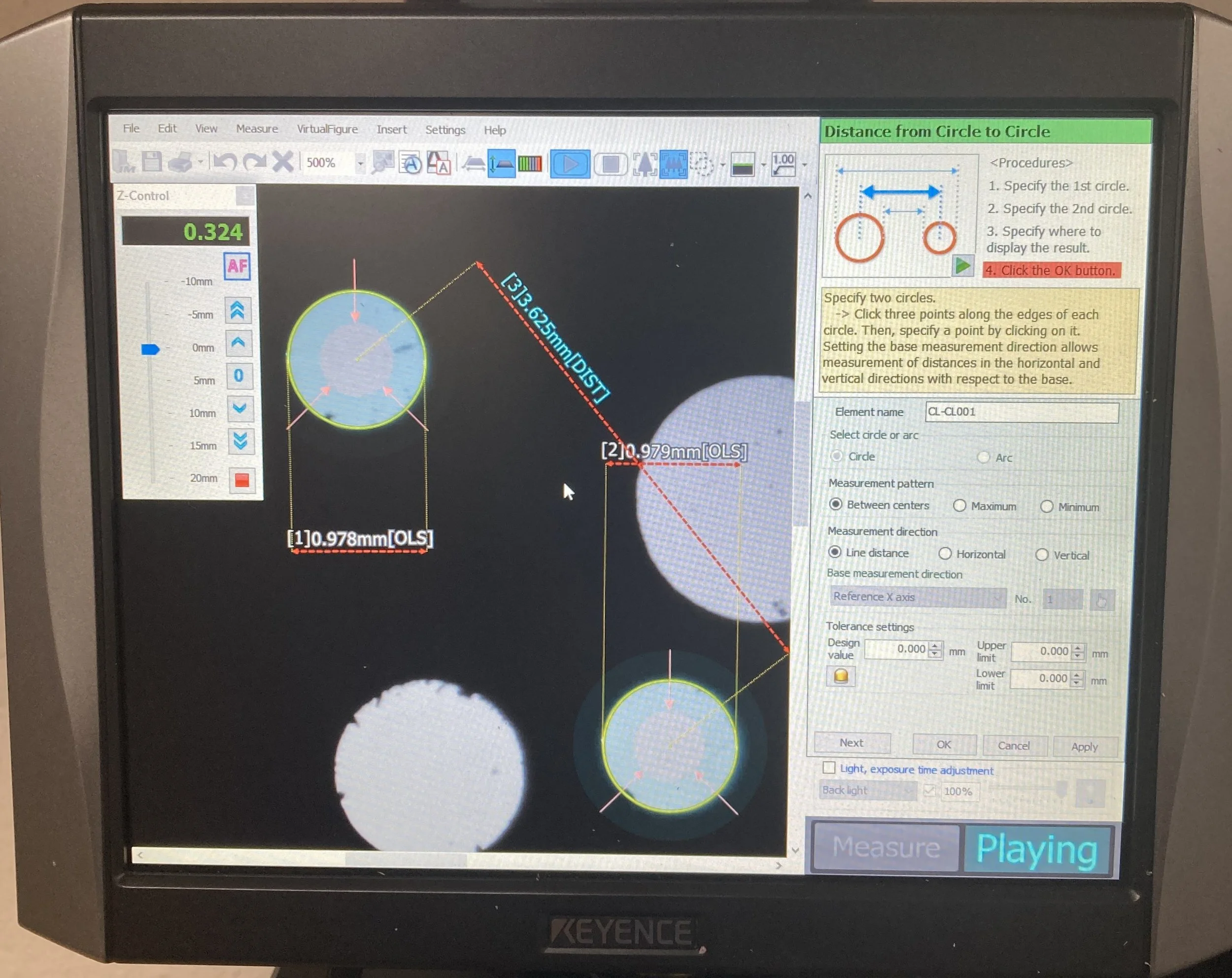
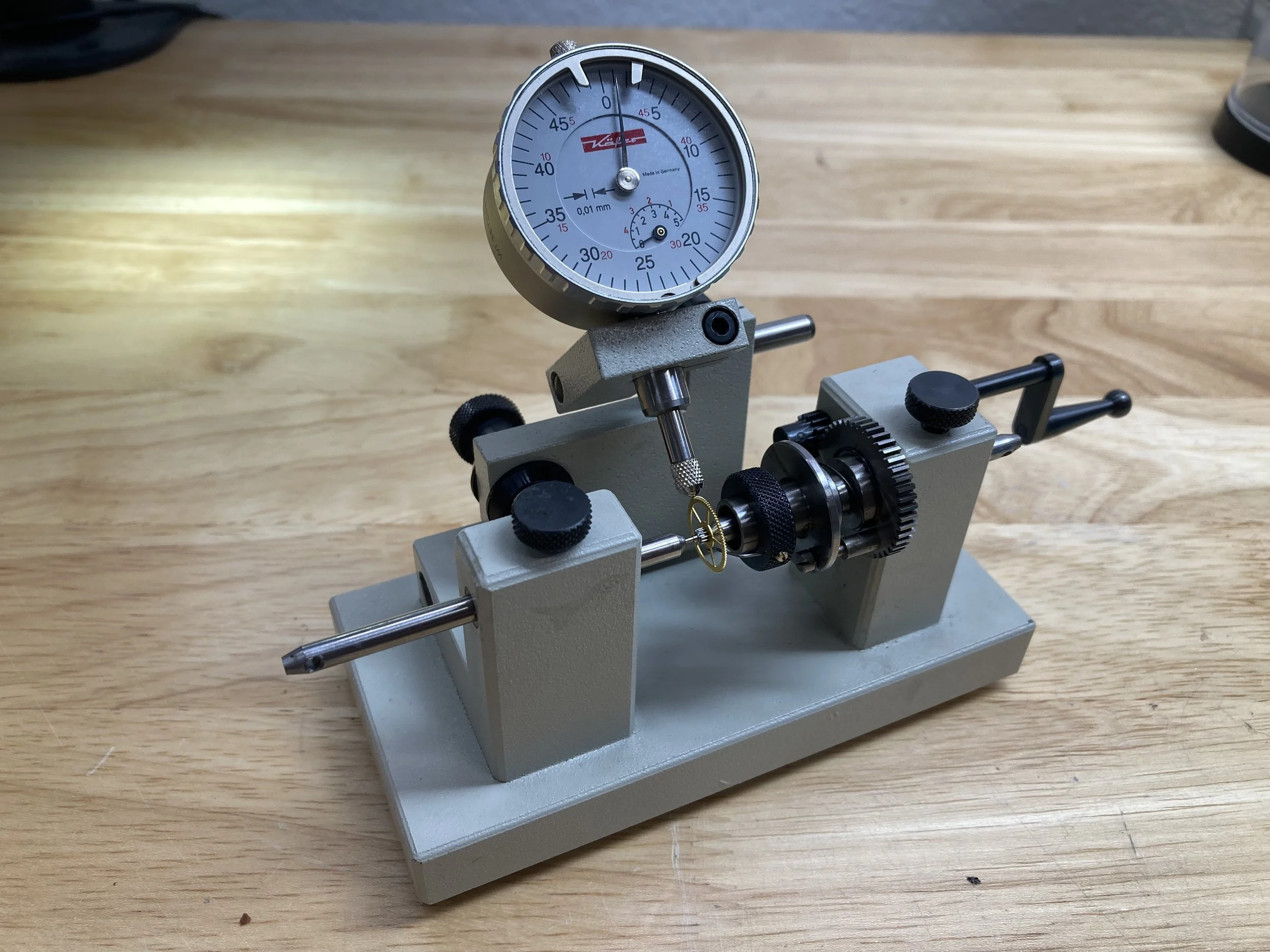
Our NS CNC Elara mill works at dimensions measured in thousandths of a millimeter. Finished components are then independently verified using a Keyence coordinate measuring machine (CMM), precision micrometers and a granite surface plate.
Wheels and pinions are checked for concentricity. Plates are checked for thickness. Critical features are measured against their CAD geometry.
If a part is wrong, even by an amount almost impossible to see, the answer is simple: Make another part.
POLISHING & FINISHING
THE MACHINE IS FINISHED. THE WORK ISN'T.
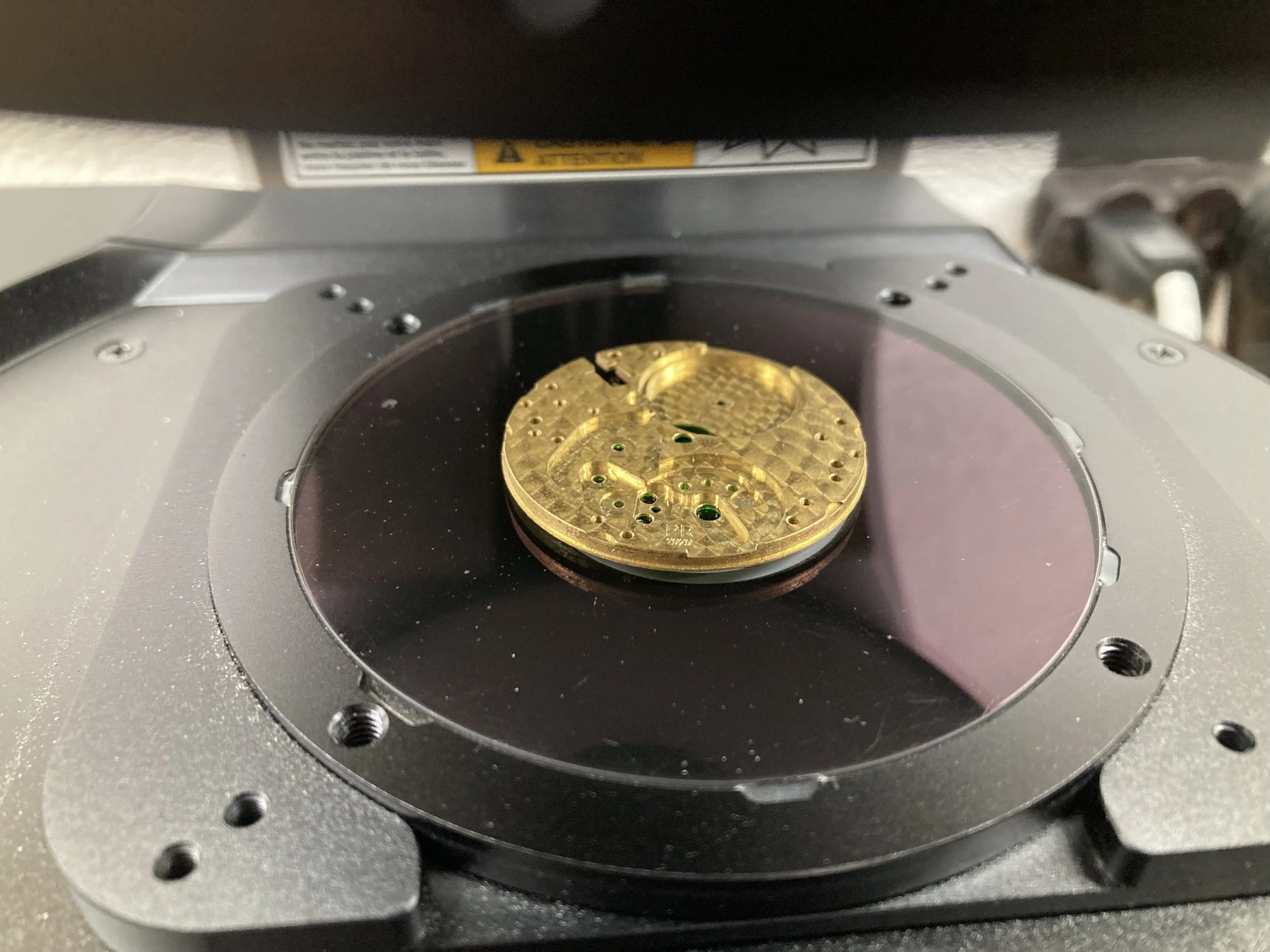
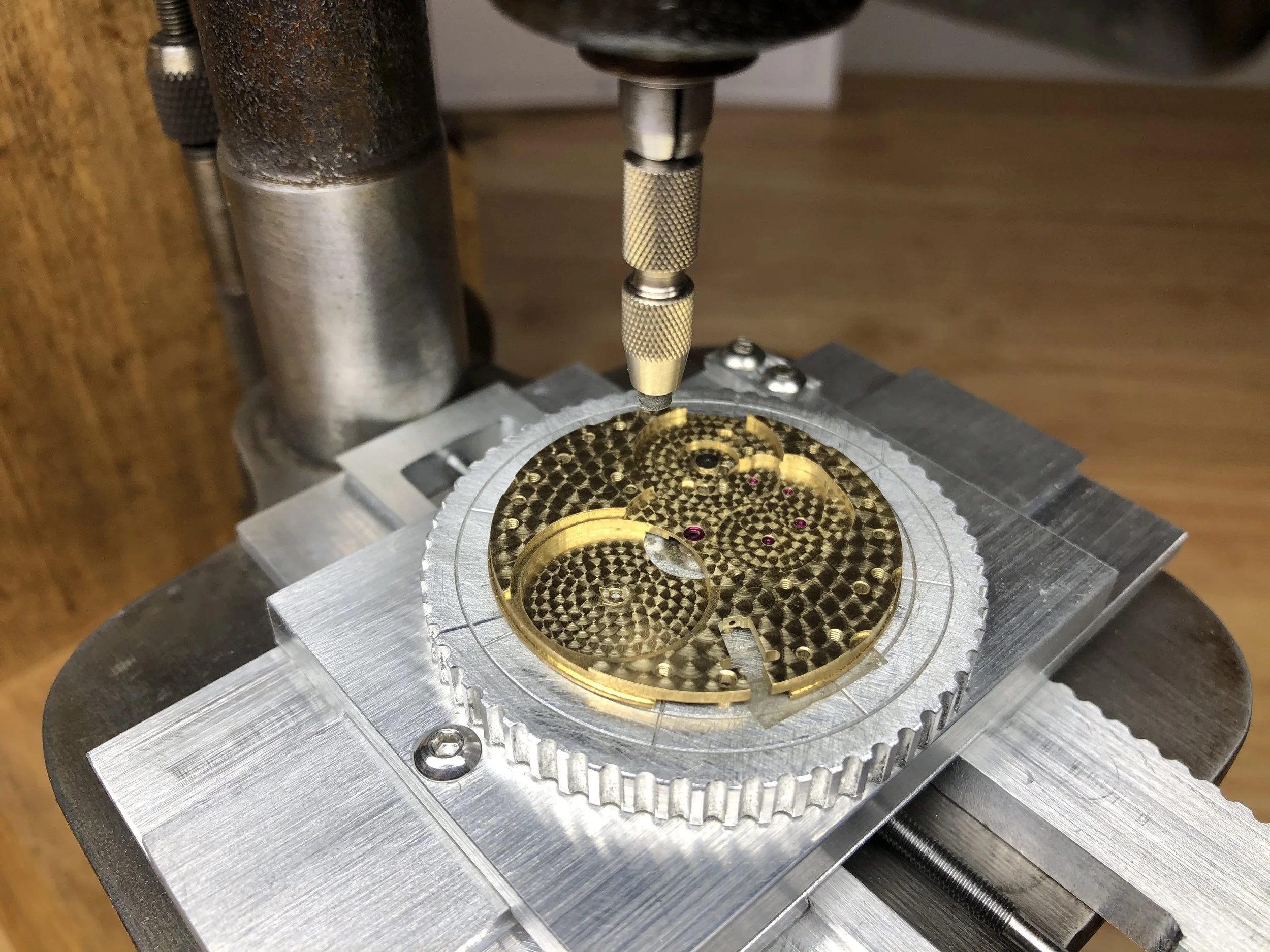
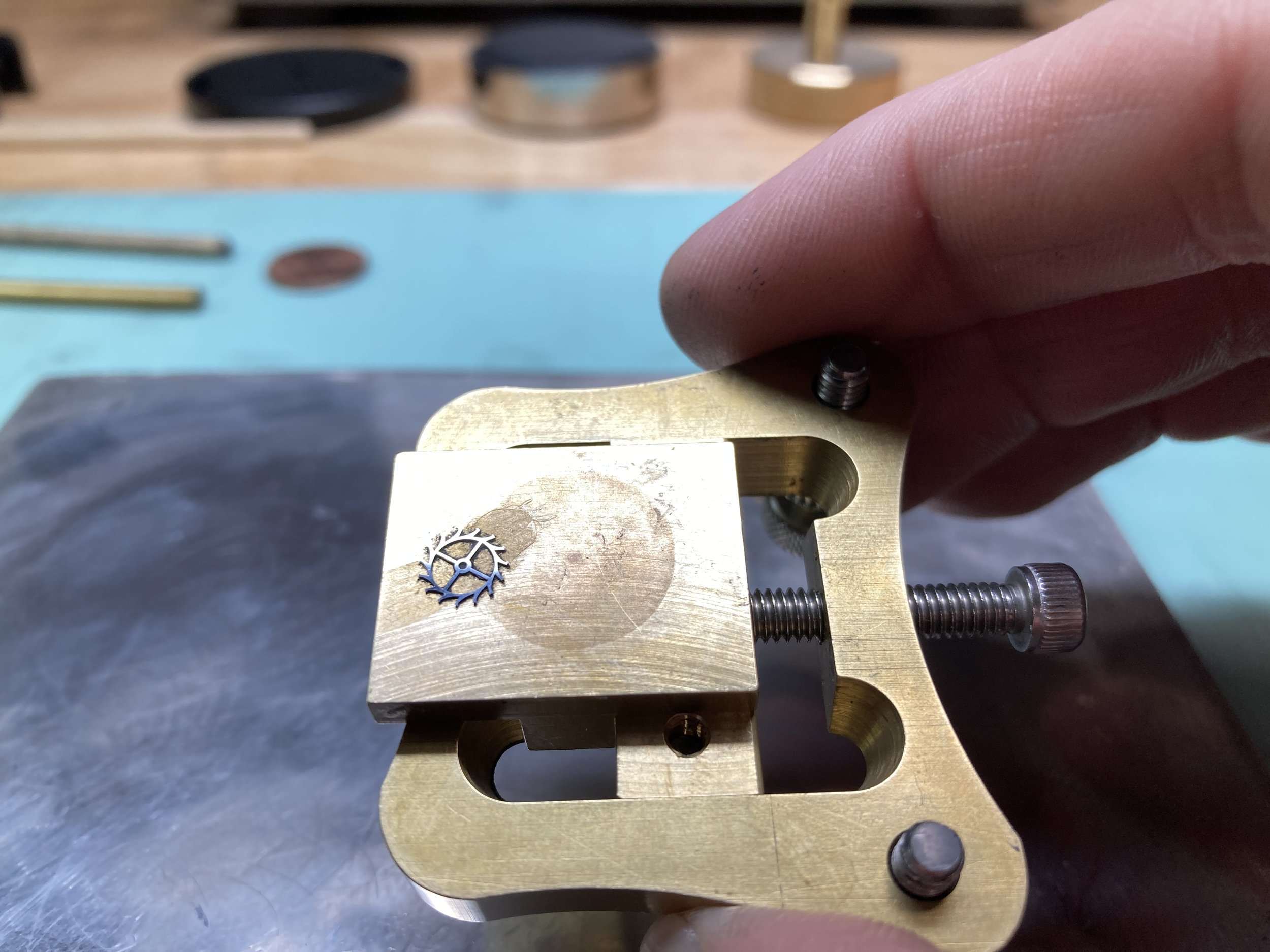
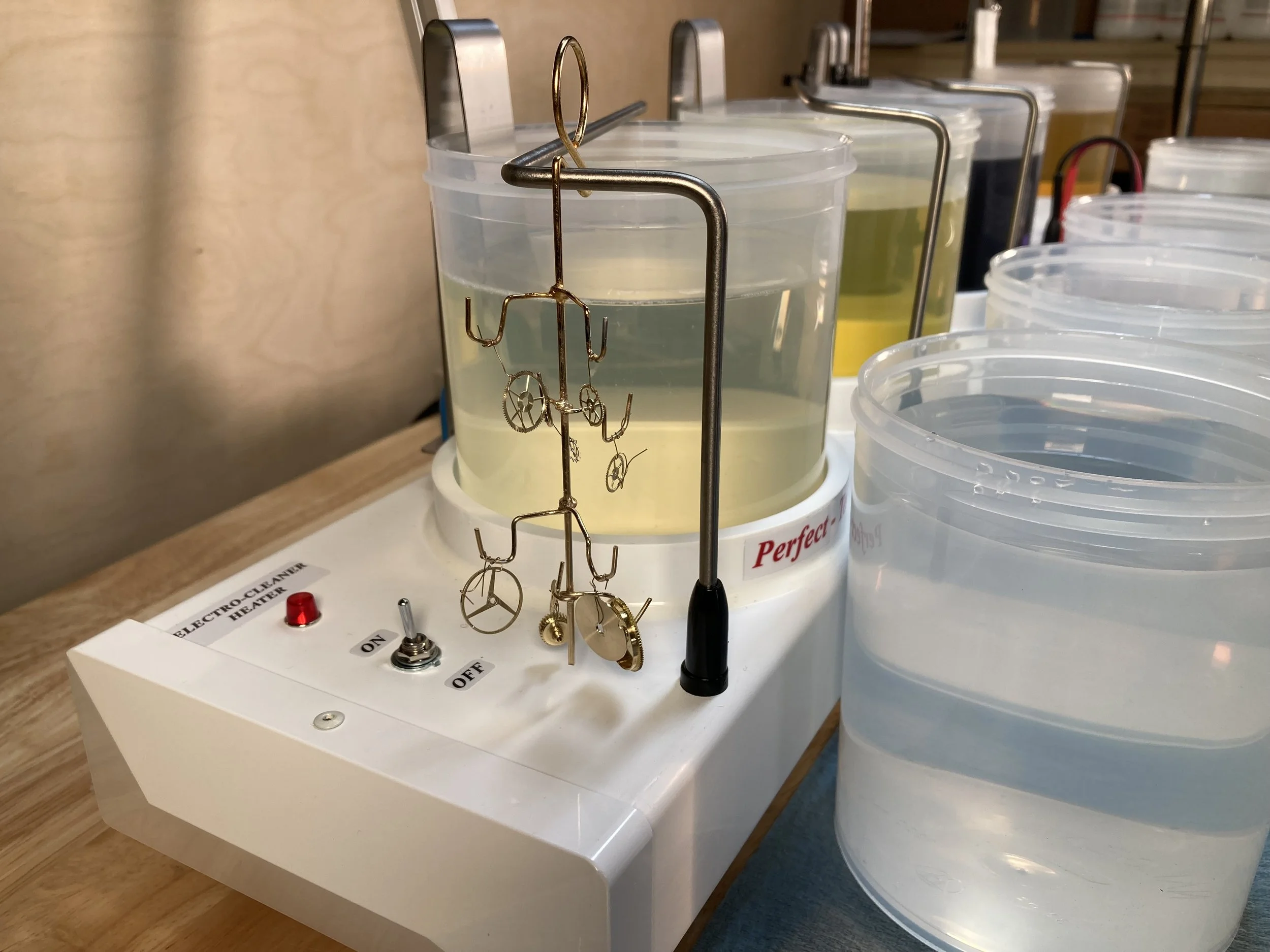
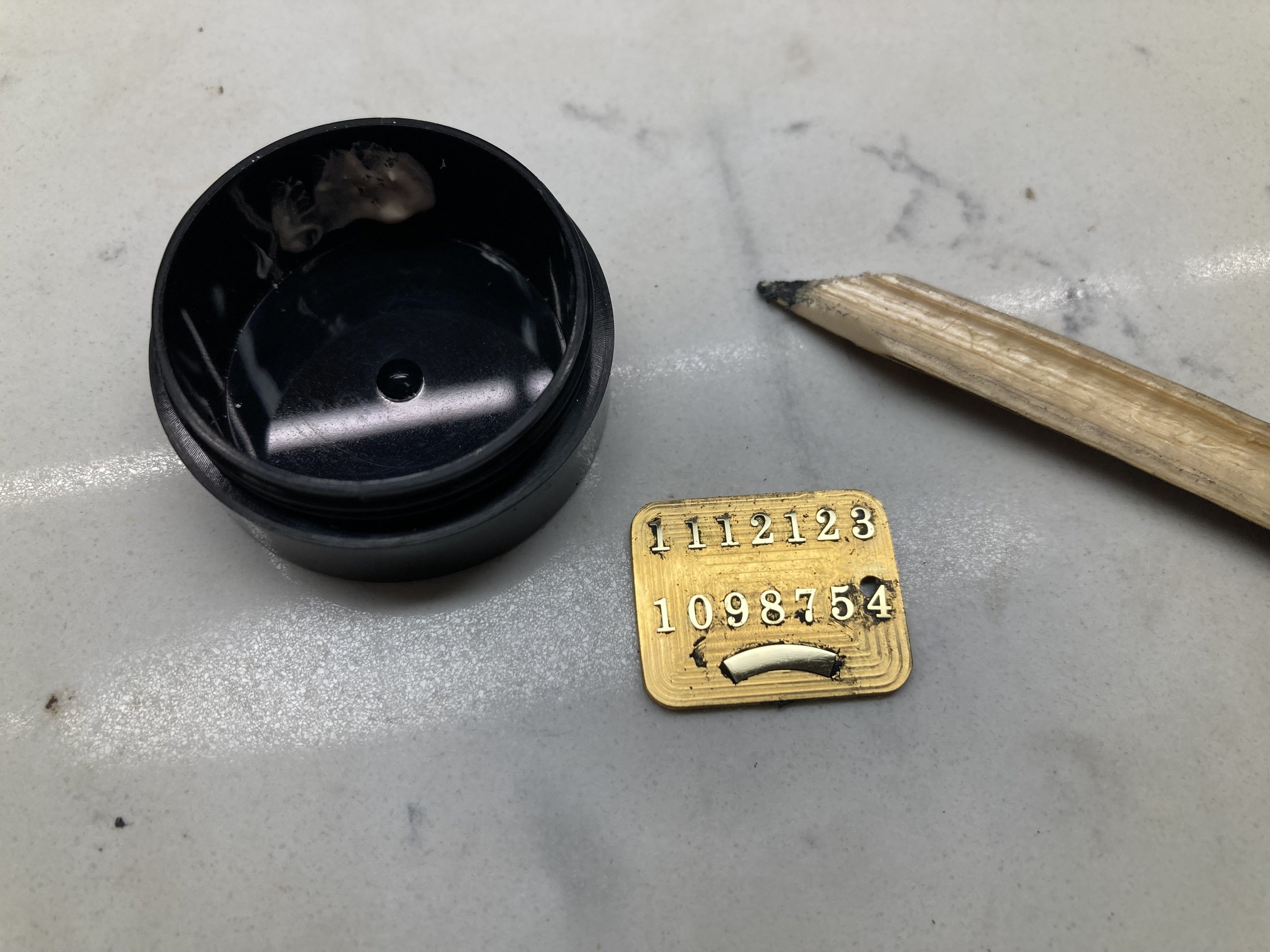
The adage, the last 10% accounts for 90% of the time spent… well this is certainly true in watchmaking, specifically polishing and finishing. For example, it takes only an hour to machine the bridges and bore the jewel holes, but this same bridges take 8 hours to finish and polish. First the “pearlage” finishing is performed on a dedicated sensitive precision drill press (top), then the edges are chamferred and mirror polished (bottom), and finally the parts are electroplated with 24k gold and rhodium.
A movement can function before its edges are beveled. Before its surfaces are polished. Before decoration is applied. Those hours are not required to make the machine run. They are required because Roysdon cares how the machine was made.
Depending on the watch, finishing may include anglage, black or mirror polishing, pearlage, straight graining and precious-metal plating. Each technique adds time without adding function. It reveals something else instead: the hand of the person who made it.
LEATHER
THE FINAL MATERIAL TOUCHES THE SKIN.
A watch may contain hundreds of metal components, but the part that connects it to its owner is leather. So that, too, is made here.
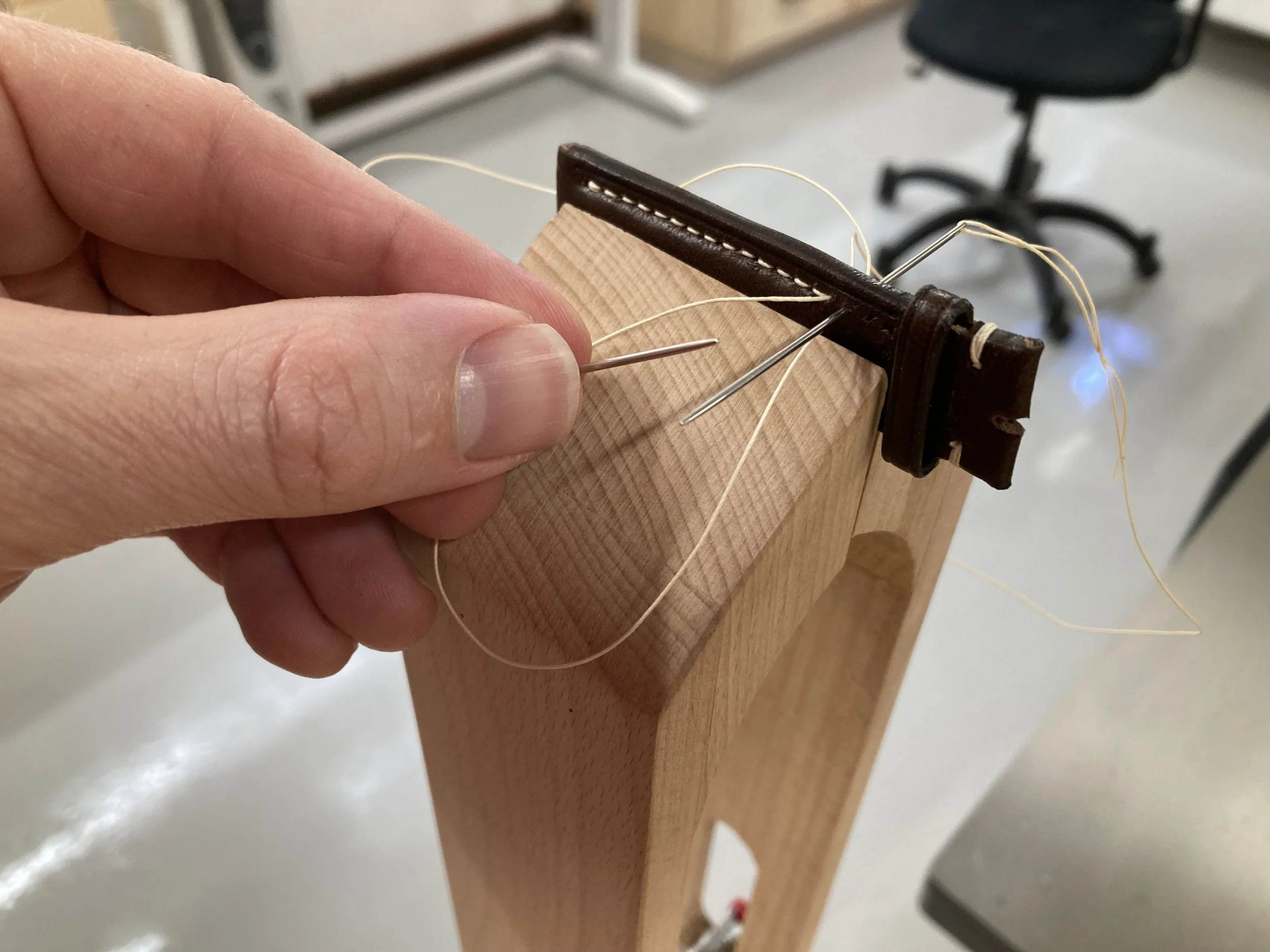
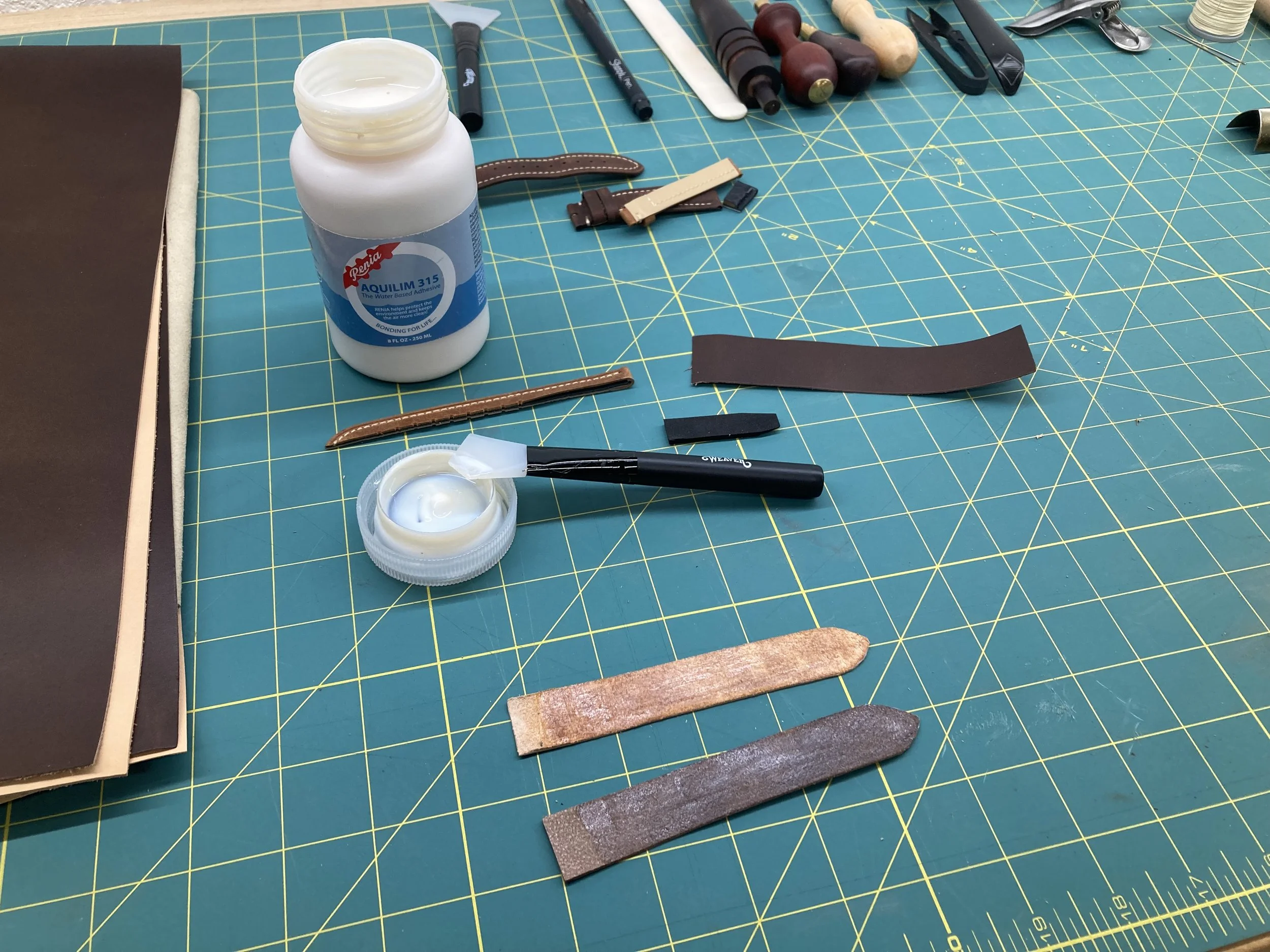
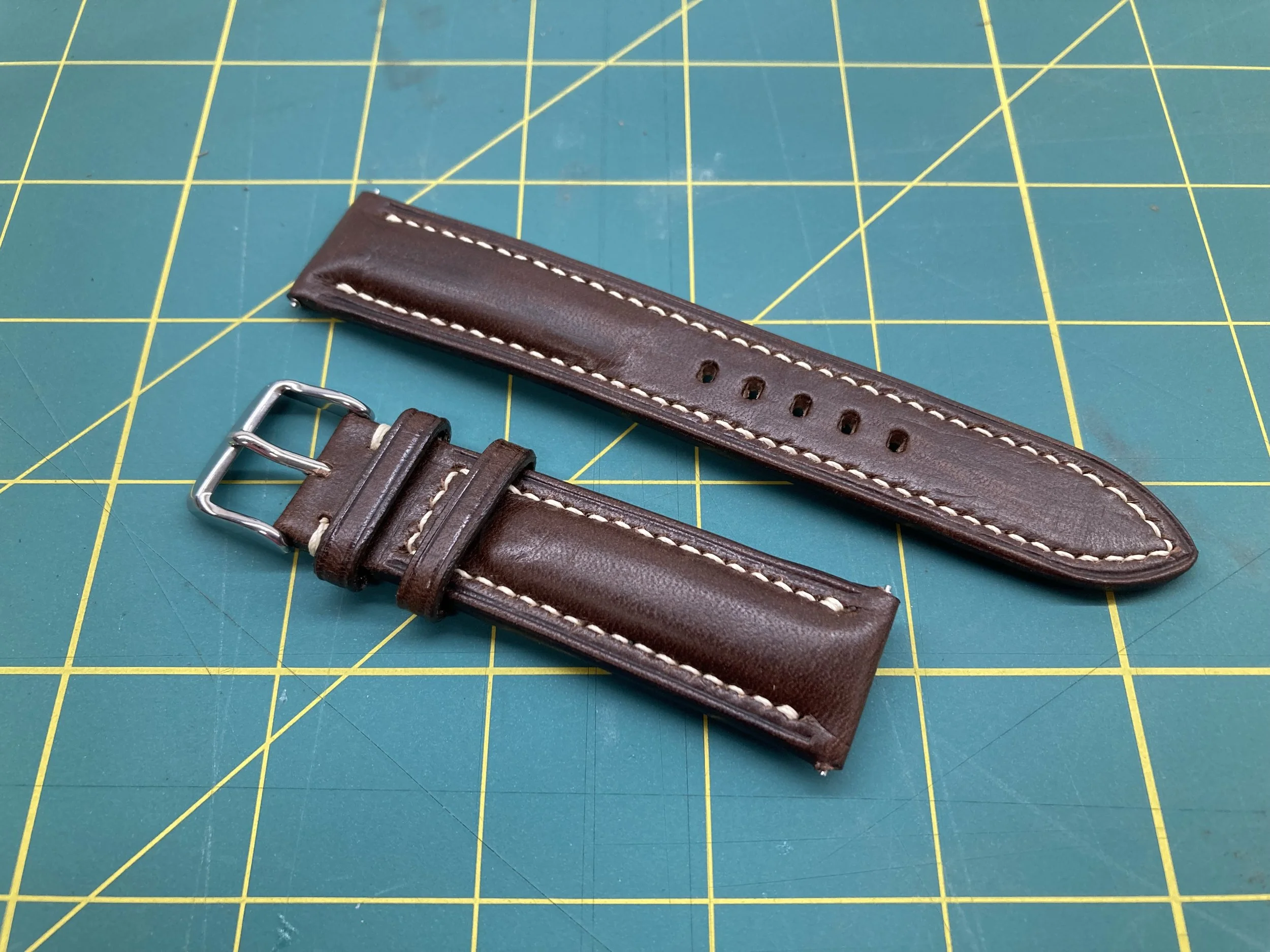
Rather than simply stacking layers and painting the exposed edges, we developed a 48-step process in which the outer leather is tapered and carefully wrapped over the sides of the strap. The result is a continuous grain that flows from the face of the strap around its edges, creating a cleaner, softer and more comfortable finish.
TOOLS
SOMETIMES MAKING THE WATCH BEGINS BY MAKING WHAT MAKES THE WATCH.
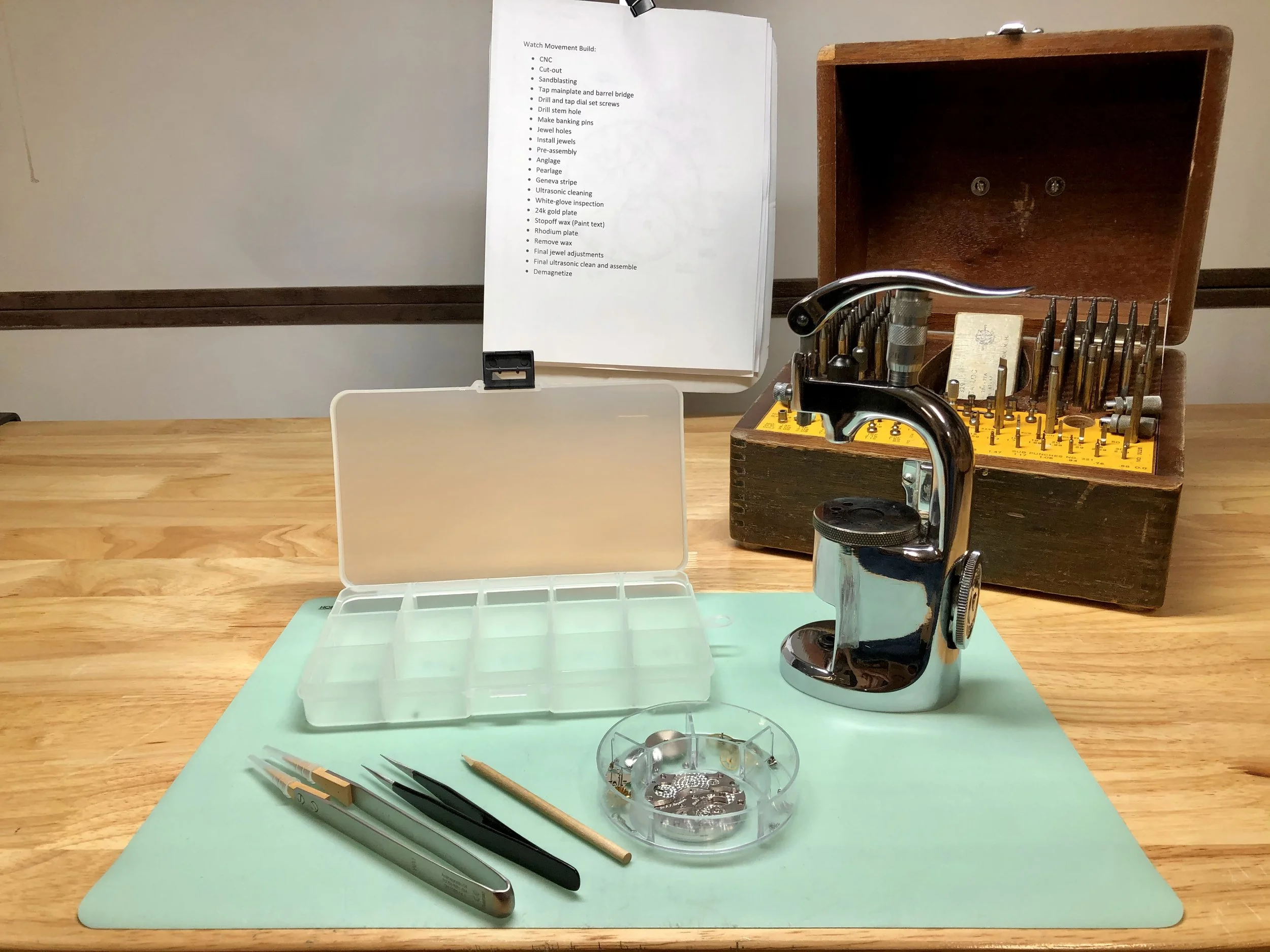
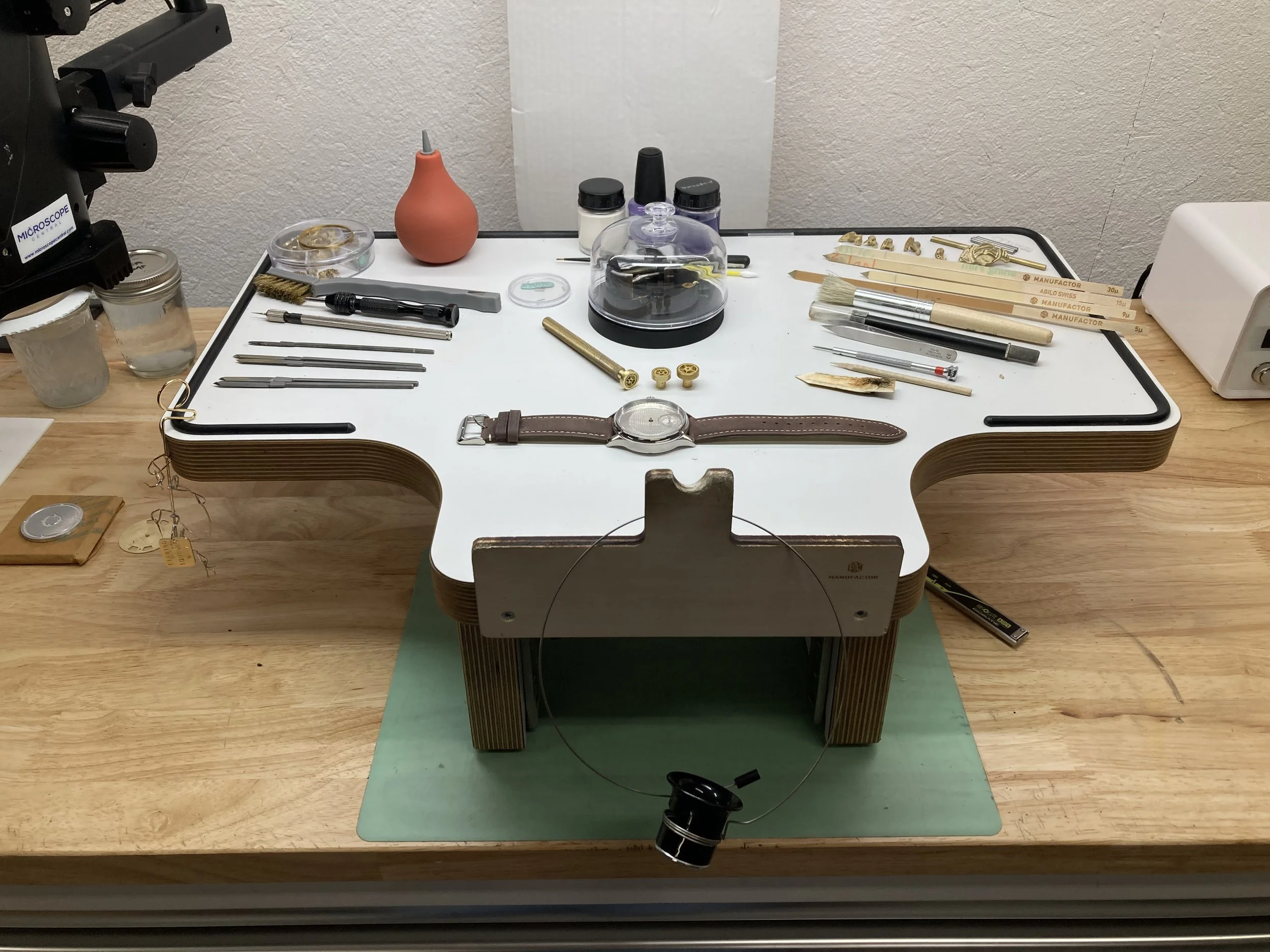
Watchmaking has always depended upon specialized tools. Sometimes the right tool already exists. Sometimes it must be modified. And sometimes the only answer is to design and build it from scratch. Many of the fixtures and machines used to produce Roysdon Watches were created in the same workshop as the watches themselves.
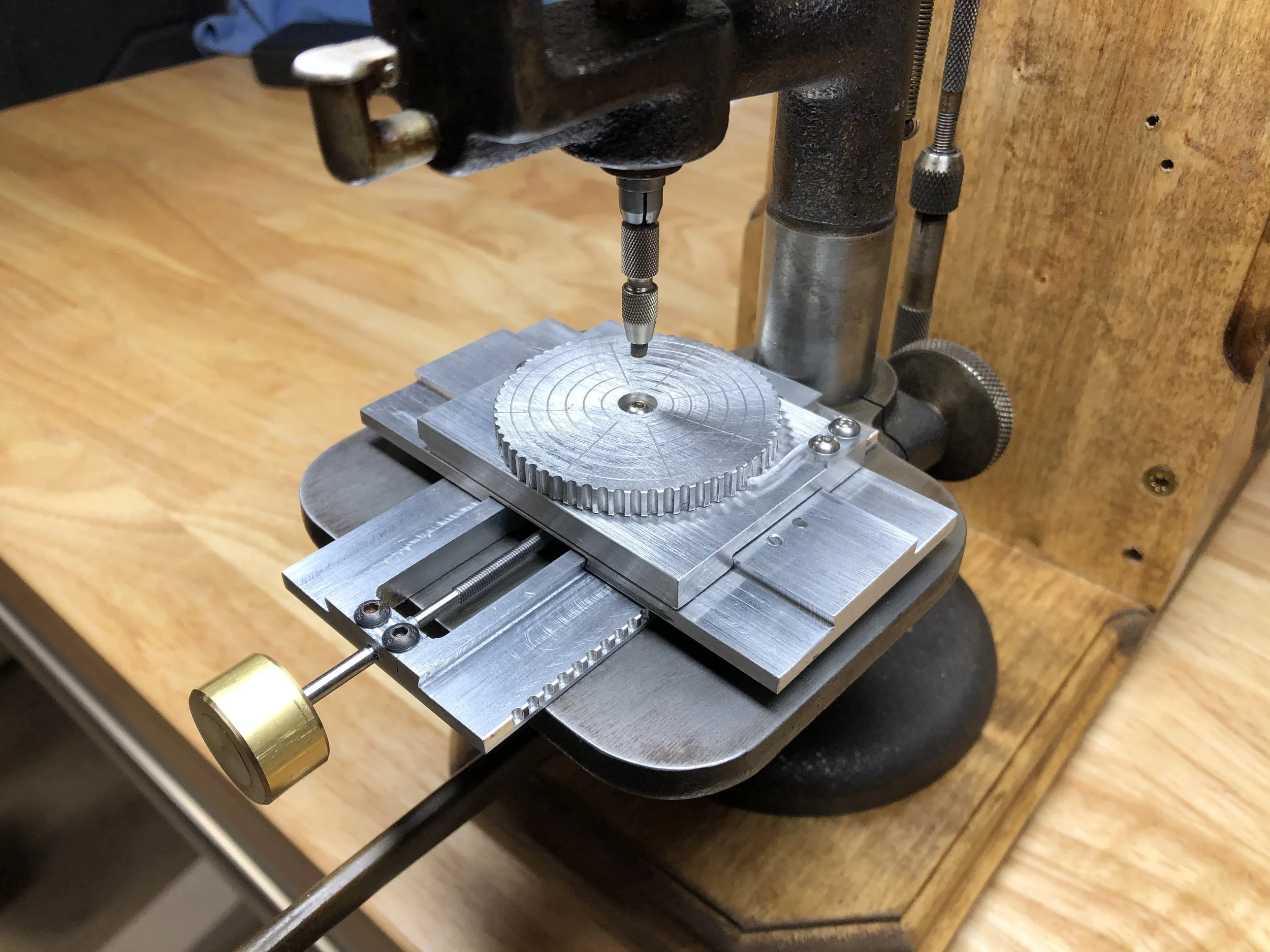
Pearlage Jig
Designed in Fusion 360 and machined in-house for Model One, this fixture precisely controls the placement of decorative patterns such as pearlage and Geneva stripes. As our movements evolved, the tool evolved with them.

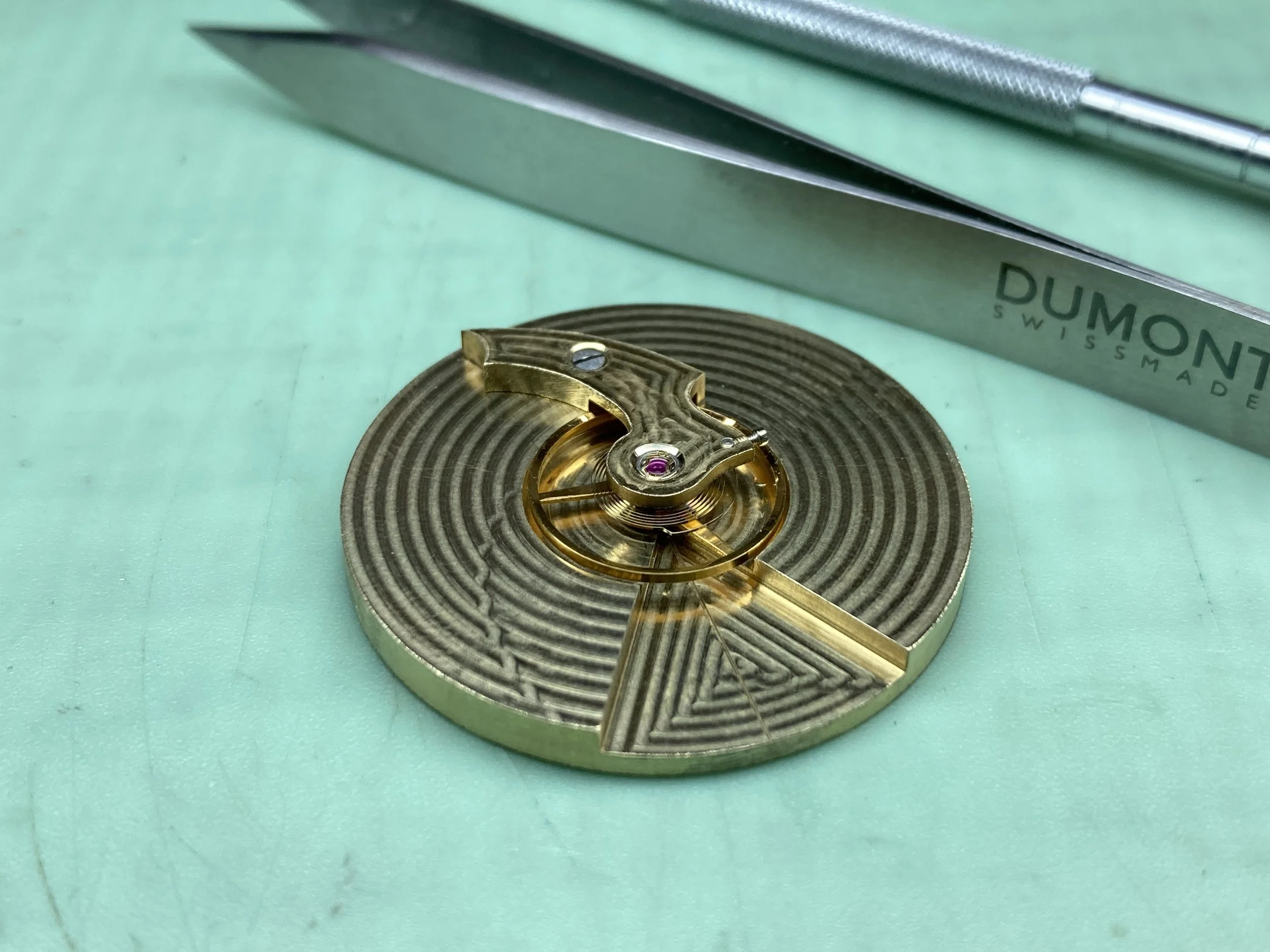
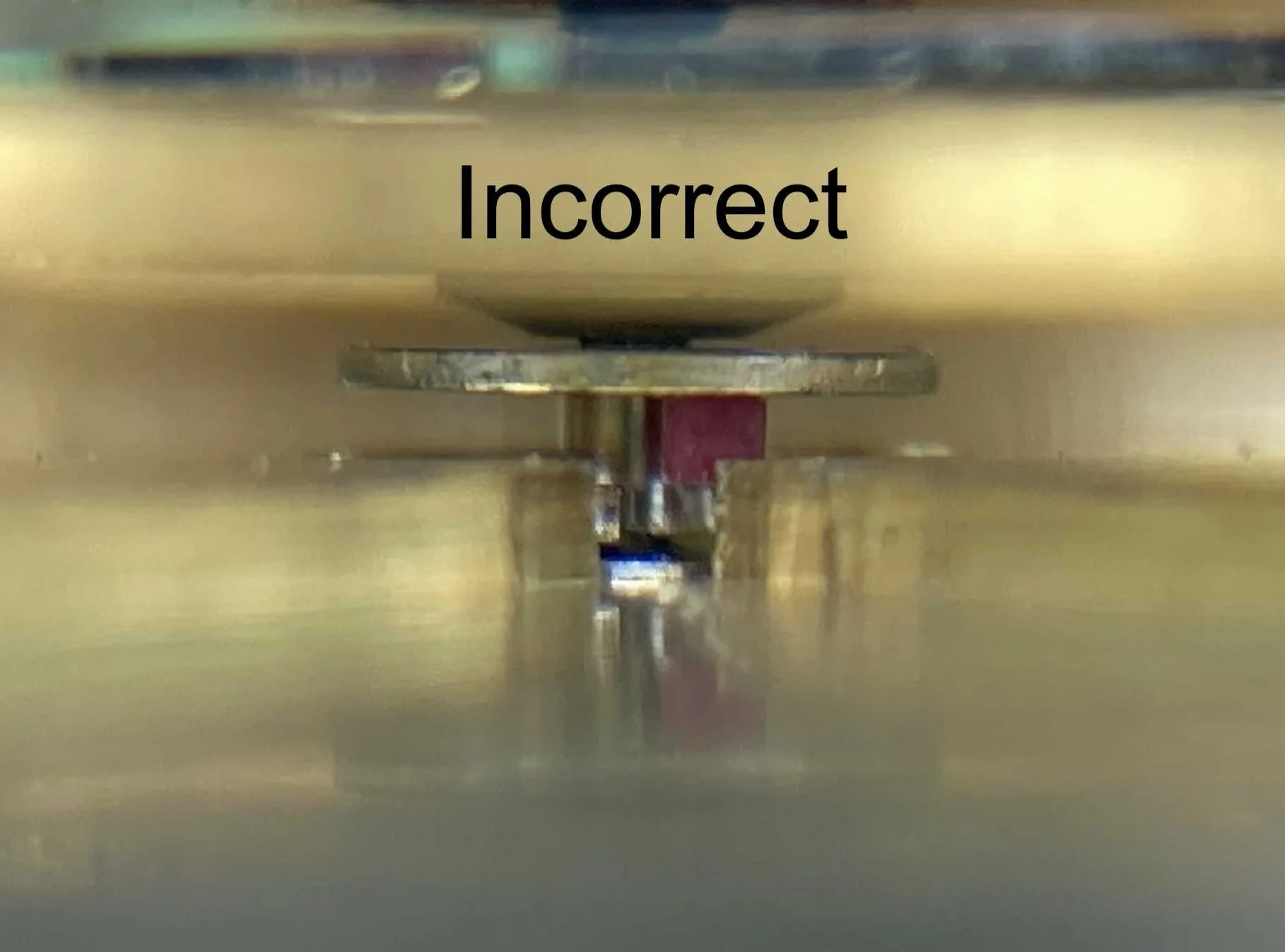
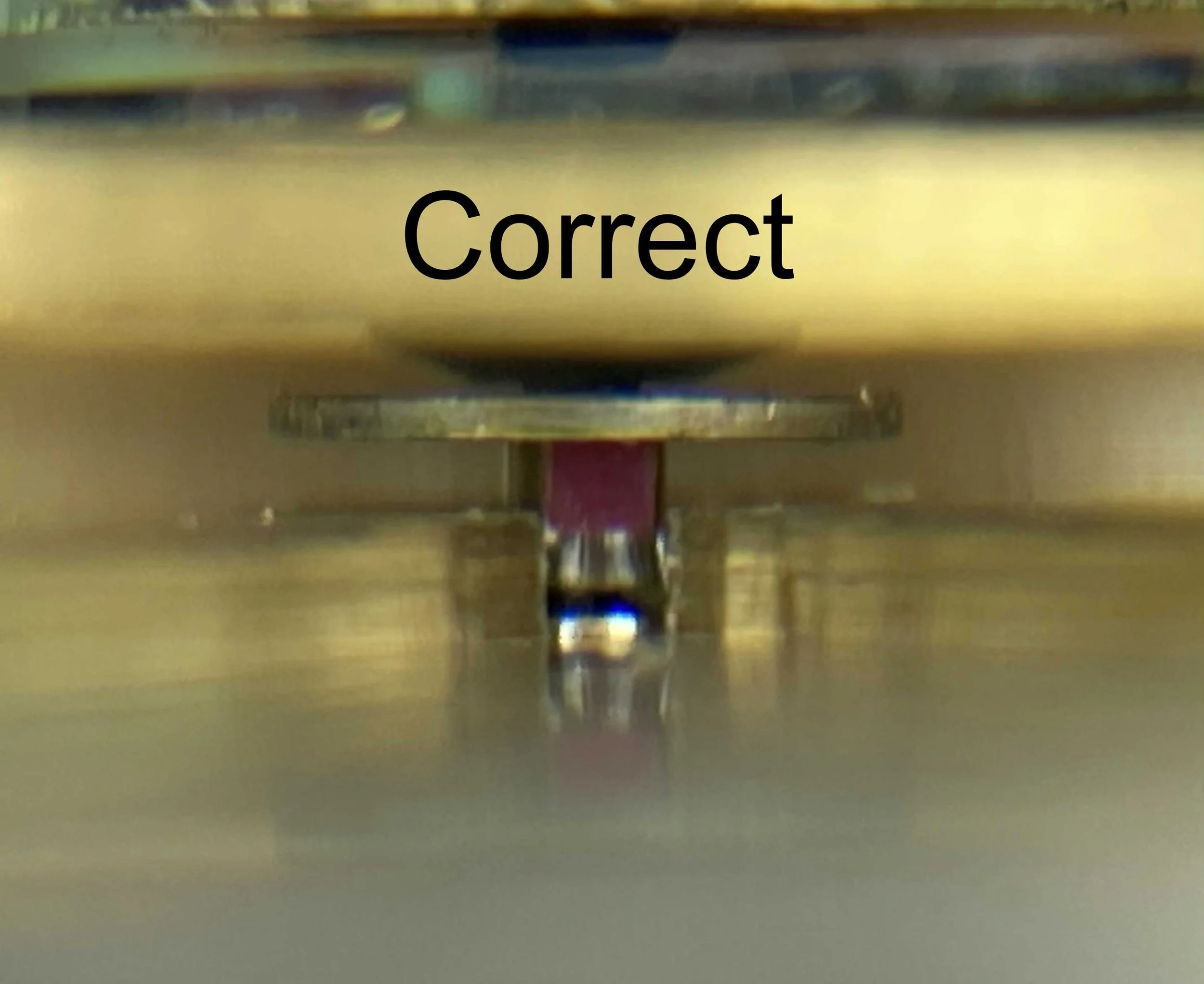
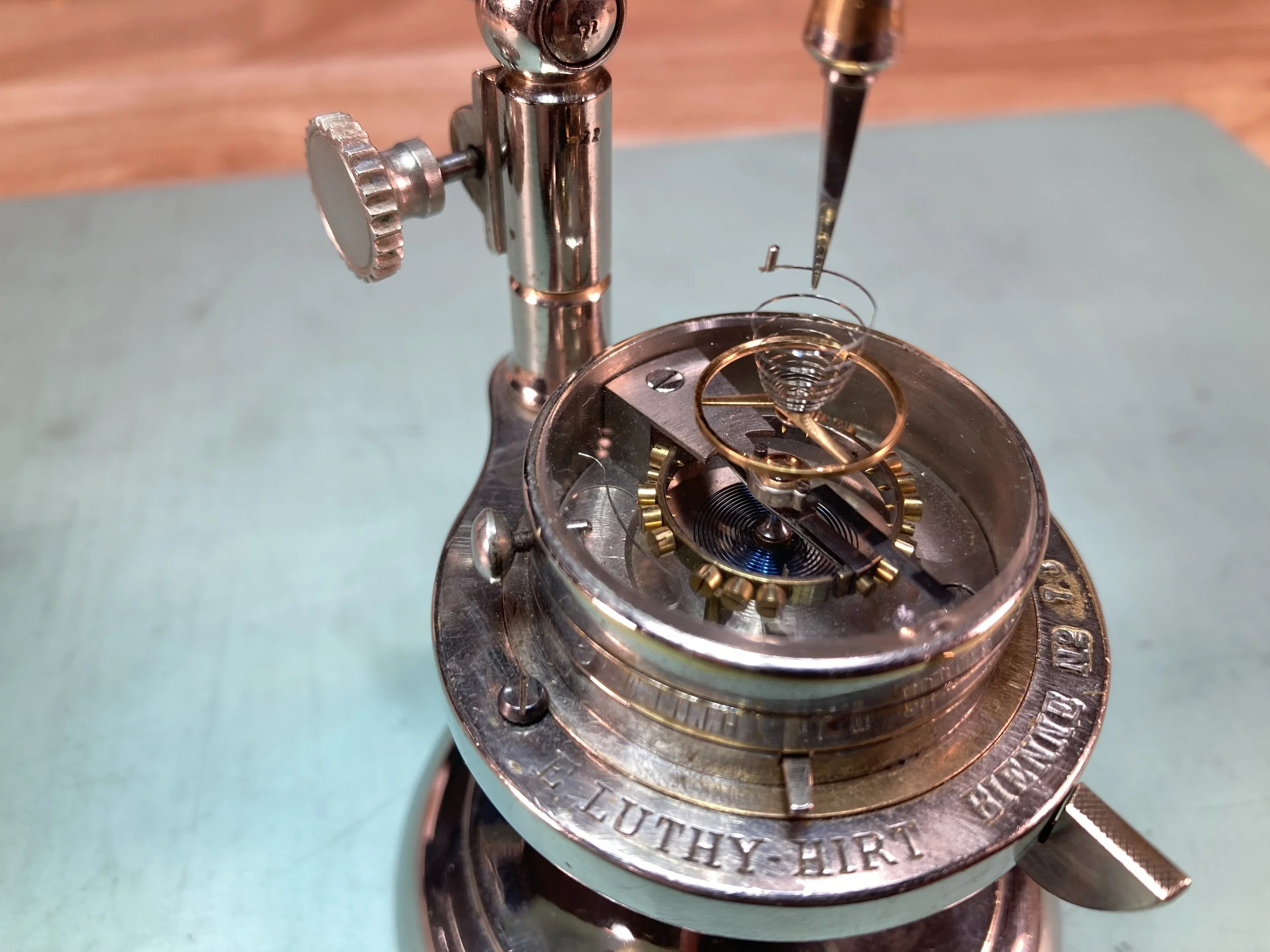
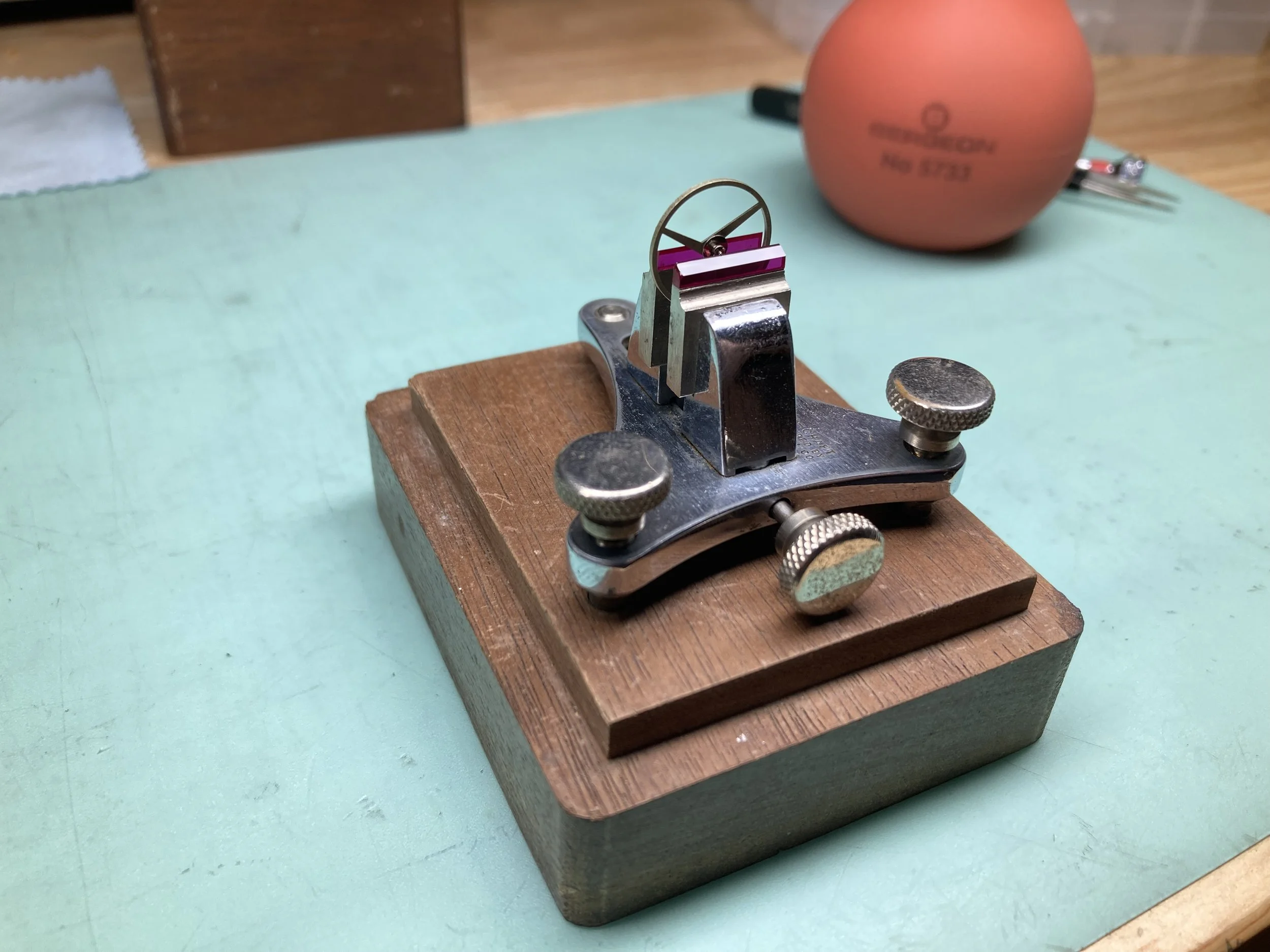
Free-sprung Balance Tool
The Model One free-sprung balance created a difficult alignment problem: positioning the hairspring and impulse jewel precisely relative to the escapement.
The solution was another tool, designed specifically to make that alignment visible and repeatable.
Dial Pad Printer
WHEN THE MACHINE DIDN'T EXIST, WE BUILT IT.
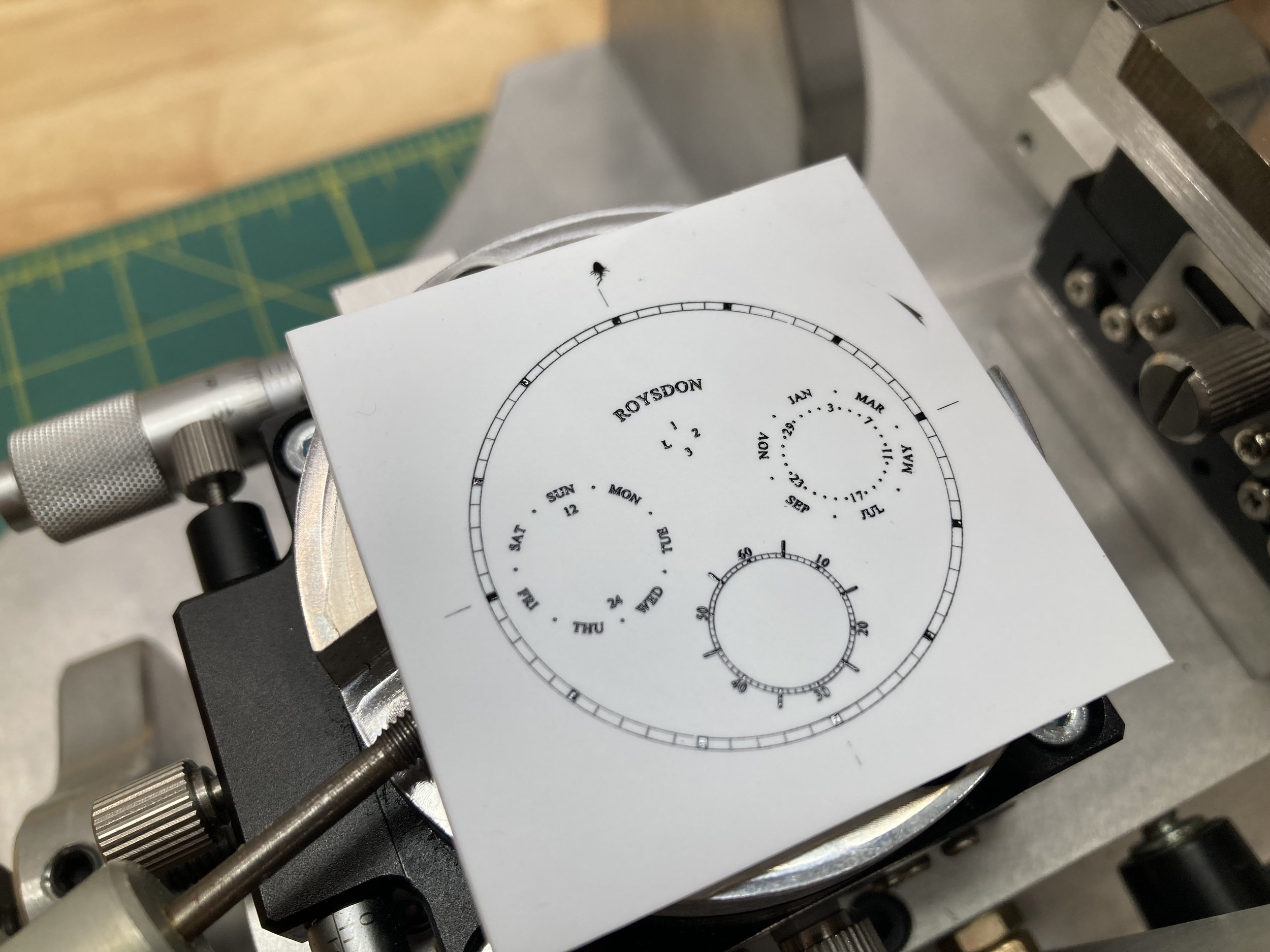
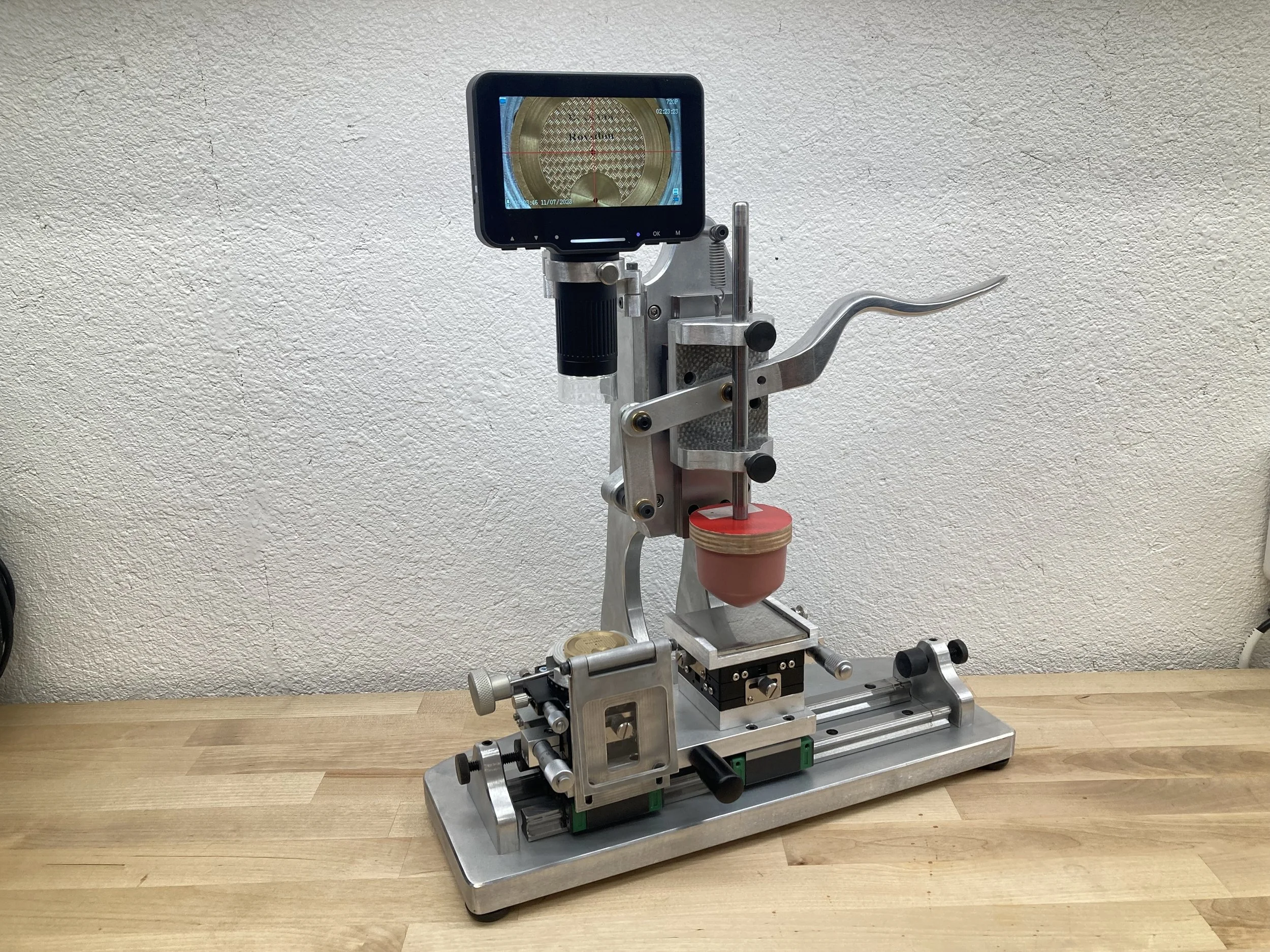
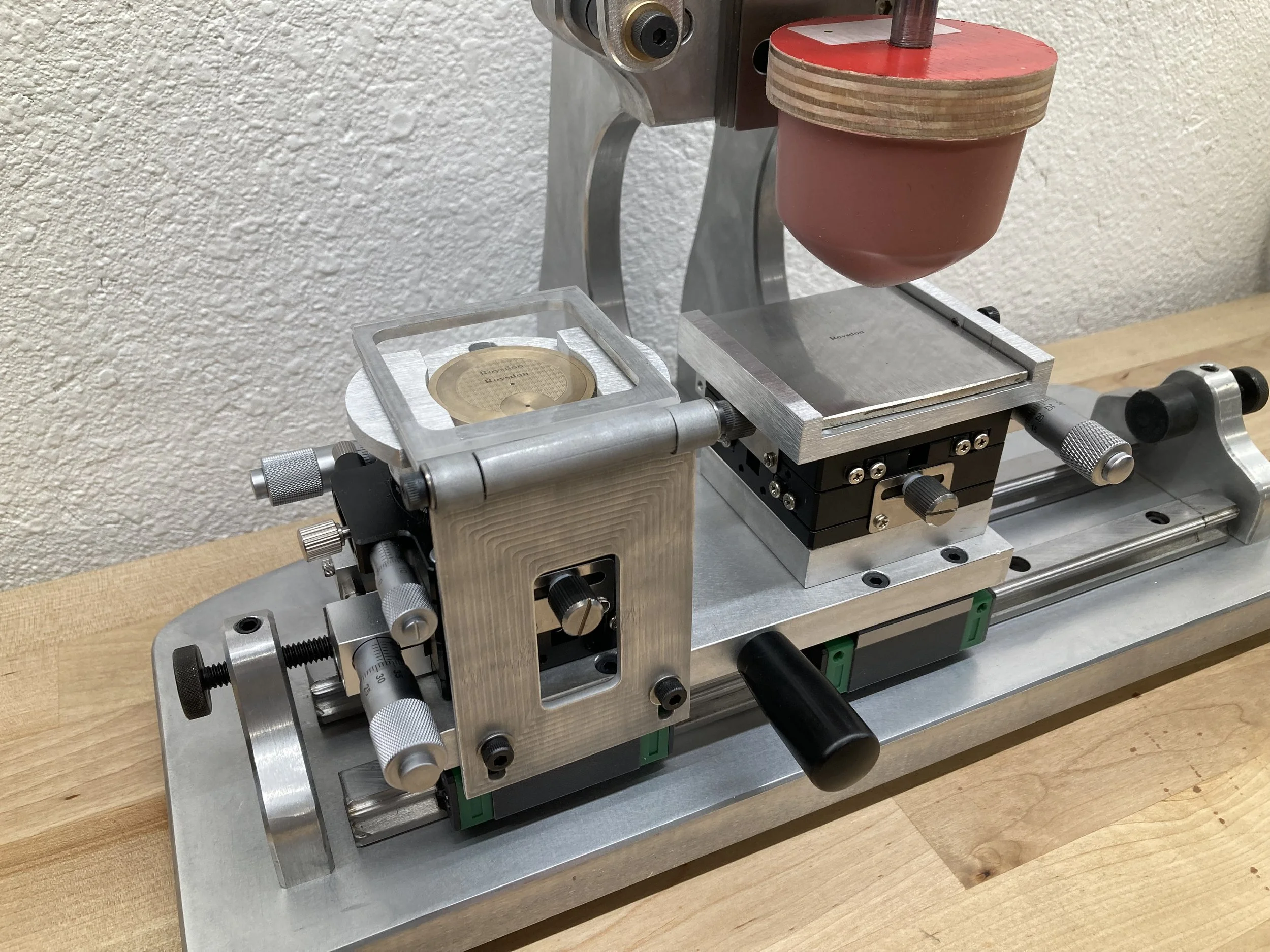
Accurately printing the fine lettering and chapter markings on a watch dial required a precision manual pad printer.
So Paul designed one in Fusion 360 and spent two weeks building it largely by hand. Even the tool itself was treated like a watch: chamfered and mirror-polished edges, straight-grained surfaces, pearlage, and a hand-sculpted polished handle.
A machine built to make a detail on another machine.
ASSEMBLY & REGULATION
HUNDREDS OF HOURS CONVERGE.
Only now do the separate crafts become one watch. The finished movement is assembled and regulated. The dial and hands are fitted. The movement enters the case. The crown, crystal, buckle and strap take their places.
Parts that began separately as calculations, raw metal, molten gold, sheets of silver and leather finally become a single mechanical machine.
The finished watch may measure only 40 millimeters across. The work inside it does not.
THE MOST PRECIOUS MATERIAL IN A ROYSDON WATCH IS TIME.
Not because it measures time. Because it contains it. Hundreds of hours of one person's finite life. Decades before that acquiring the knowledge necessary to spend those hours well. There can never be more Roysdon Watches than one watchmaker has time to make.